
اپلیکیشن اندرویدی فلشکارت آموزشی زبان انگلیسی برای مهندسان در مباحث مربوط به مهندسی ایمنی در صنایع غذایی و فرآوری مواد
🎓 دوره آموزشی جامع
📚 اطلاعات دوره
عنوان دوره: دوره زبان انگلیسی برای مهندسان در مباحث مربوط به مهندسی ایمنی در صنایع غذایی و فرآوری مواد
موضوع کلی: آموزش زبانهای خارجی
موضوع میانی: زبان در حوزه مهندسی
📋 سرفصلهای دوره
- 1. Course Introduction & Learning Objectives
- 2. Review of Essential Technical Grammar I: Tenses and Voice
- 3. Review of Essential Technical Grammar II: Modals and Conditionals
- 4. Vocabulary Building Strategies for Engineers
- 5. Common Technical Abbreviations and Acronyms
- 6. Understanding Prefixes and Suffixes in Technical Terms
- 7. Defining Key Terms: Engineering and Safety
- 8. Distinguishing Formal vs. Informal English in Professional Settings
- 9. Using Technical Dictionaries and Glossaries Effectively
- 10. Pronunciation of Technical Terminology
- 11. Skimming and Scanning Technical Texts
- 12. Identifying Main Ideas in Engineering Documents
- 13. Understanding Complex Sentence Structures in Technical Writing
- 14. Interpreting Tables and Data in Reports
- 15. Analyzing Graphs and Charts for Technical Information
- 16. Reading and Understanding Technical Drawings and Schematics
- 17. Comprehending Industry Standards and Regulations (e.g., ISO, OSHA)
- 18. Extracting Key Information from Research Papers and Articles
- 19. Understanding Warning Labels and Safety Data Sheets (SDS)
- 20. Differentiating Facts, Opinions, and Hypotheses in Technical Content
- 21. Recognizing Cause and Effect in Technical Descriptions
- 22. Understanding Sequential Processes and Instructions
- 23. Inferring Meaning from Context in Technical Documents
- 24. Summarizing Technical Articles and Manuals
- 25. Critical Reading and Analysis of Safety Reports
- 26. Structure of Technical Reports: Abstract, Introduction, Body, Conclusion
- 27. Writing Clear and Concise Executive Summaries
- 28. Describing Methods and Procedures in Technical Writing
- 29. Presenting Results and Findings Effectively
- 30. Writing Discussions and Recommendations
- 31. Drafting Professional Emails for Technical Communication
- 32. Writing Memos and Internal Communications for Safety Updates
- 33. Incident Report Writing: Structure, Content, and Language
- 34. Documenting Safety Procedures and Protocols
- 35. Writing Specifications and Requirements
- 36. Using Active vs. Passive Voice Appropriately in Technical Writing
- 37. Referencing and Citing Sources (e.g., APA, IEEE styles)
- 38. Proofreading and Editing Technical Documents for Clarity and Accuracy
- 39. Constructing Flowcharts and Diagrams with Clear Text Labels
- 40. Preparing User Manuals and Operating Instructions
- 41. Delivering Effective Technical Presentations
- 42. Structuring a Safety Briefing or Toolbox Talk
- 43. Describing Technical Processes and Equipment Verbally
- 44. Participating in Technical Meetings and Discussions
- 45. Asking Clarifying Questions in Technical Contexts
- 46. Responding to Technical Questions Effectively and Concisely
- 47. Giving Clear Instructions and Warnings
- 48. Expressing Opinions and Justifying Them with Technical Data
- 49. Negotiating and Resolving Technical Issues
- 50. Presenting Data and Visual Aids Verbally
- 51. Introduction to Safety Engineering Principles
- 52. Key Terms: Hazard, Risk, Incident, Accident, Near Miss
- 53. Understanding Risk Assessment Methodologies and Tools
- 54. Safety Management Systems (SMS) Overview
- 55. Personal Protective Equipment (PPE) Terminology and Usage
- 56. Emergency Preparedness and Response Vocabulary
- 57. Accident Investigation Techniques and Reporting
- 58. Safety Culture and Behavioral Safety Concepts
- 59. Legal and Ethical Aspects of Safety Engineering
- 60. Human Factors in Industrial Safety
- 61. Introduction to Food Safety Hazards: Biological, Chemical, Physical
- 62. Foodborne Pathogens and Illnesses Terminology
- 63. Principles of HACCP (Hazard Analysis Critical Control Point)
- 64. Good Manufacturing Practices (GMP) and Good Hygiene Practices (GHP)
- 65. Food Processing Equipment: Safety Features and Operation
- 66. Sanitation and Cleaning Procedures in Food Facilities
- 67. Allergen Management and Labeling Requirements
- 68. Food Storage and Temperature Control Safety
- 69. Pest Control in Food Environments and Facilities
- 70. Traceability and Recall Procedures in the Food Industry
- 71. Food Defense and Biosecurity Measures
- 72. Water Quality and Safety in Food Processing
- 73. Cross-Contamination Prevention Strategies
- 74. Regulatory Frameworks for Food Safety (e.g., FDA, EFSA)
- 75. Auditing and Inspection in Food Safety
- 76. Introduction to Material Handling Safety
- 77. Chemical Safety: SDS, Storage, Handling, and Spill Response
- 78. Machine Guarding Principles and Types
- 79. Lockout/Tagout (LOTO) Procedures for Energy Control
- 80. Fire and Explosion Prevention in Industrial Settings
- 81. Electrical Safety in Processing Plants
- 82. Confined Space Entry Procedures and Safety
- 83. Working at Height Safety Protocols
- 84. Ergonomics for Material Processing Tasks
- 85. Pressure Systems and Boiler Safety
- 86. Noise and Vibration Hazards Control
- 87. Dust Explosion Prevention and Mitigation
- 88. Waste Management and Environmental Safety Aspects
- 89. Material Processing Equipment: Specific Safety Concerns (e.g., Conveyors, Mixers)
- 90. Welding and Hot Work Safety Procedures
- 91. Analyzing Real-World Safety Incidents: Food Industry Case Study
- 92. Analyzing Real-World Safety Incidents: Material Processing Case Study
- 93. Developing and Implementing Safety Training Programs
- 94. Communicating Safety Warnings and Emergency Procedures Effectively
- 95. International Safety Standards and Compliance
- 96. Conducting Safety Audits and Inspections
- 97. Presenting Findings from a Mock Safety Investigation
- 98. Role-Playing: Handling a Safety Non-Compliance Issue
- 99. Future Trends in Industrial Safety and Technology
- 100. Project: Comprehensive Safety Plan Development (Integrated Case Study)
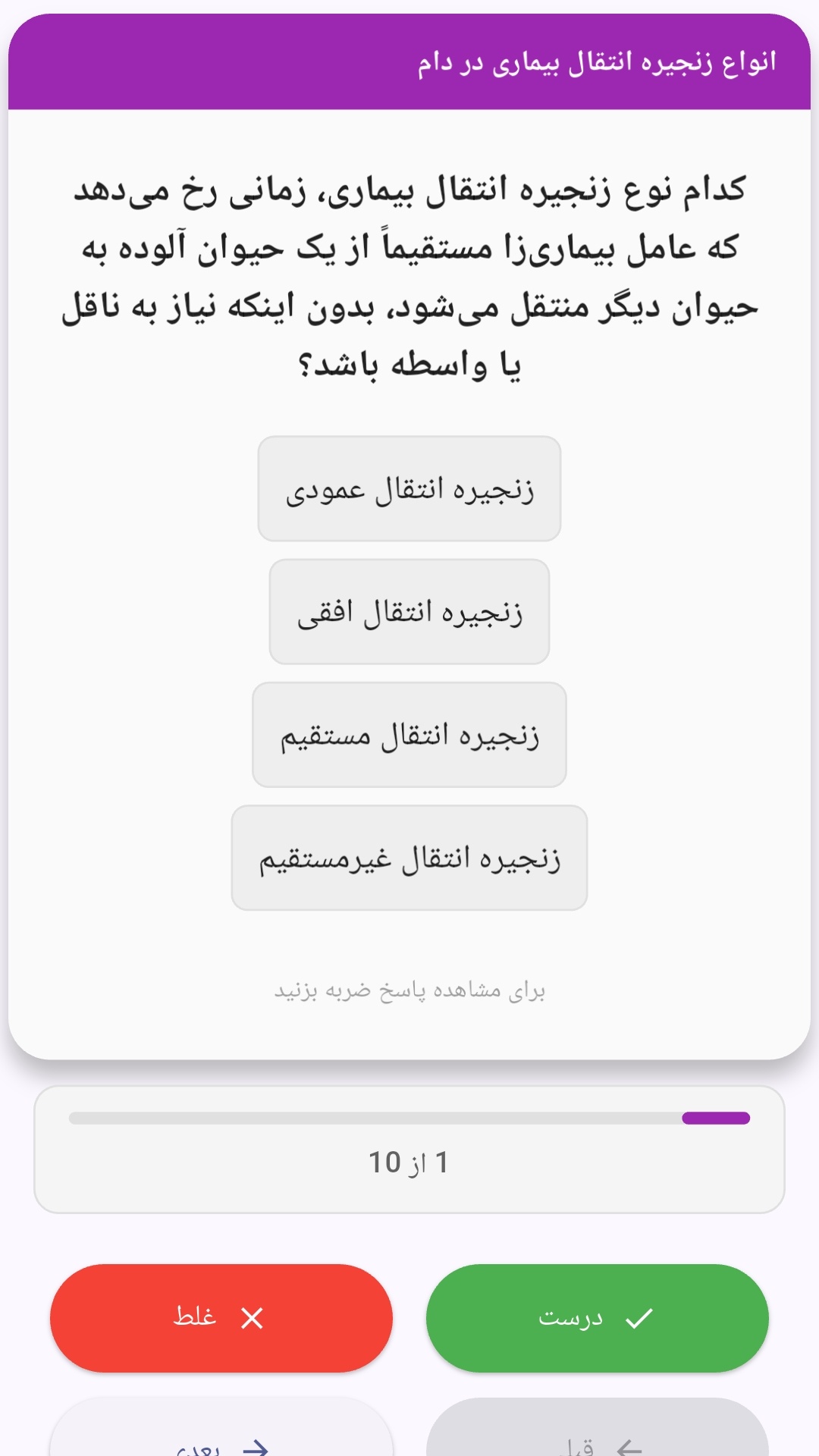
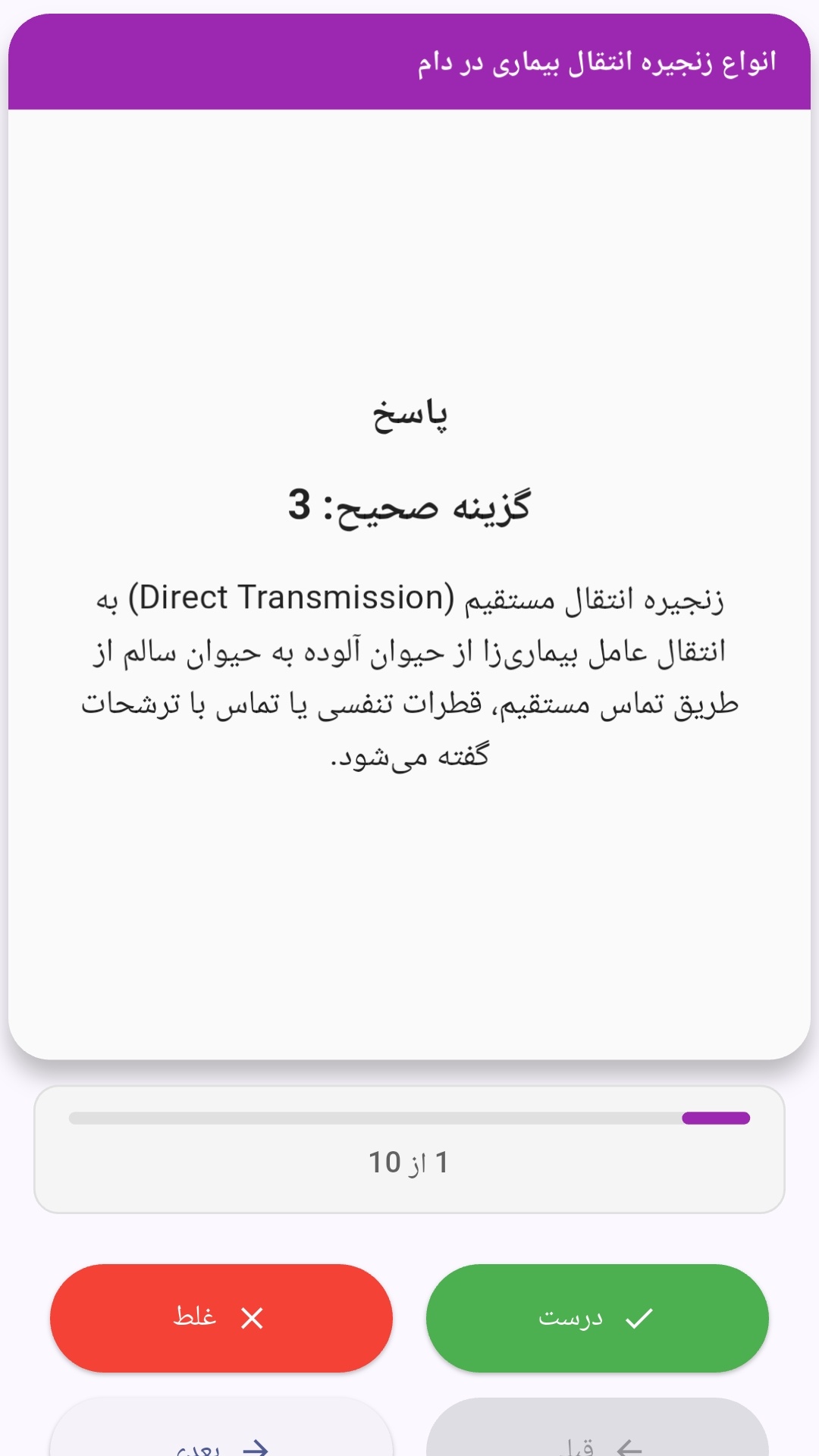
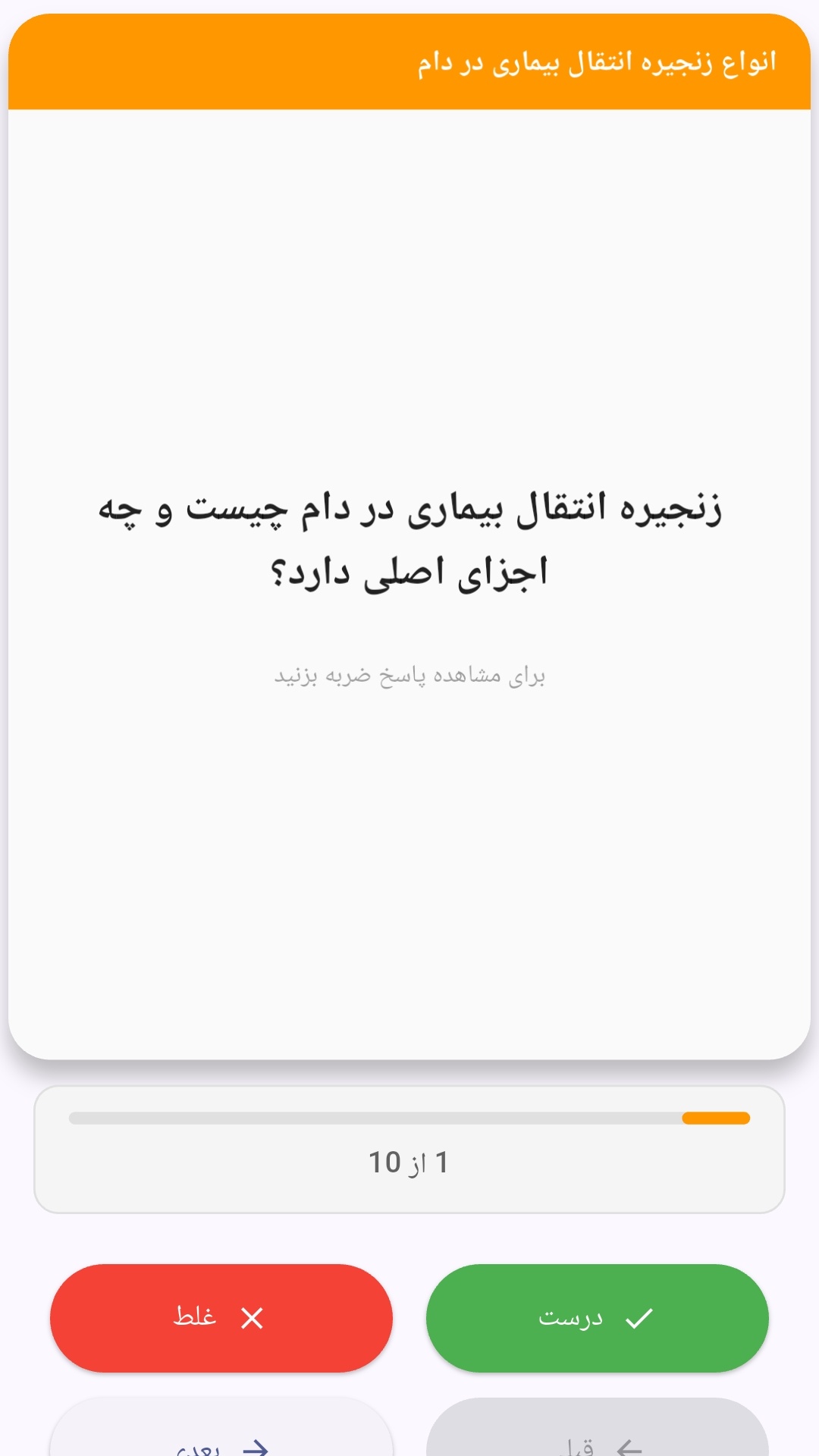
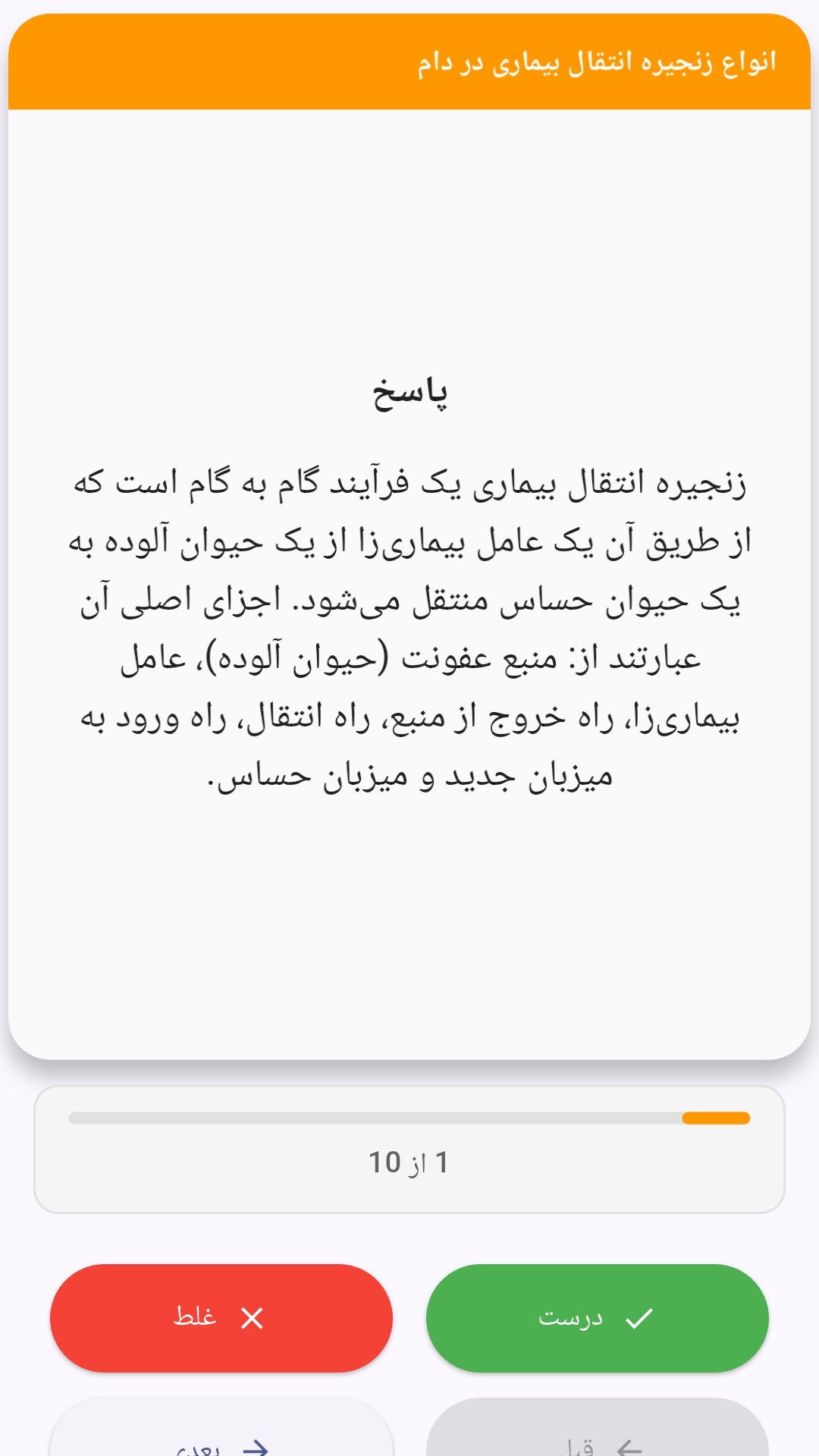
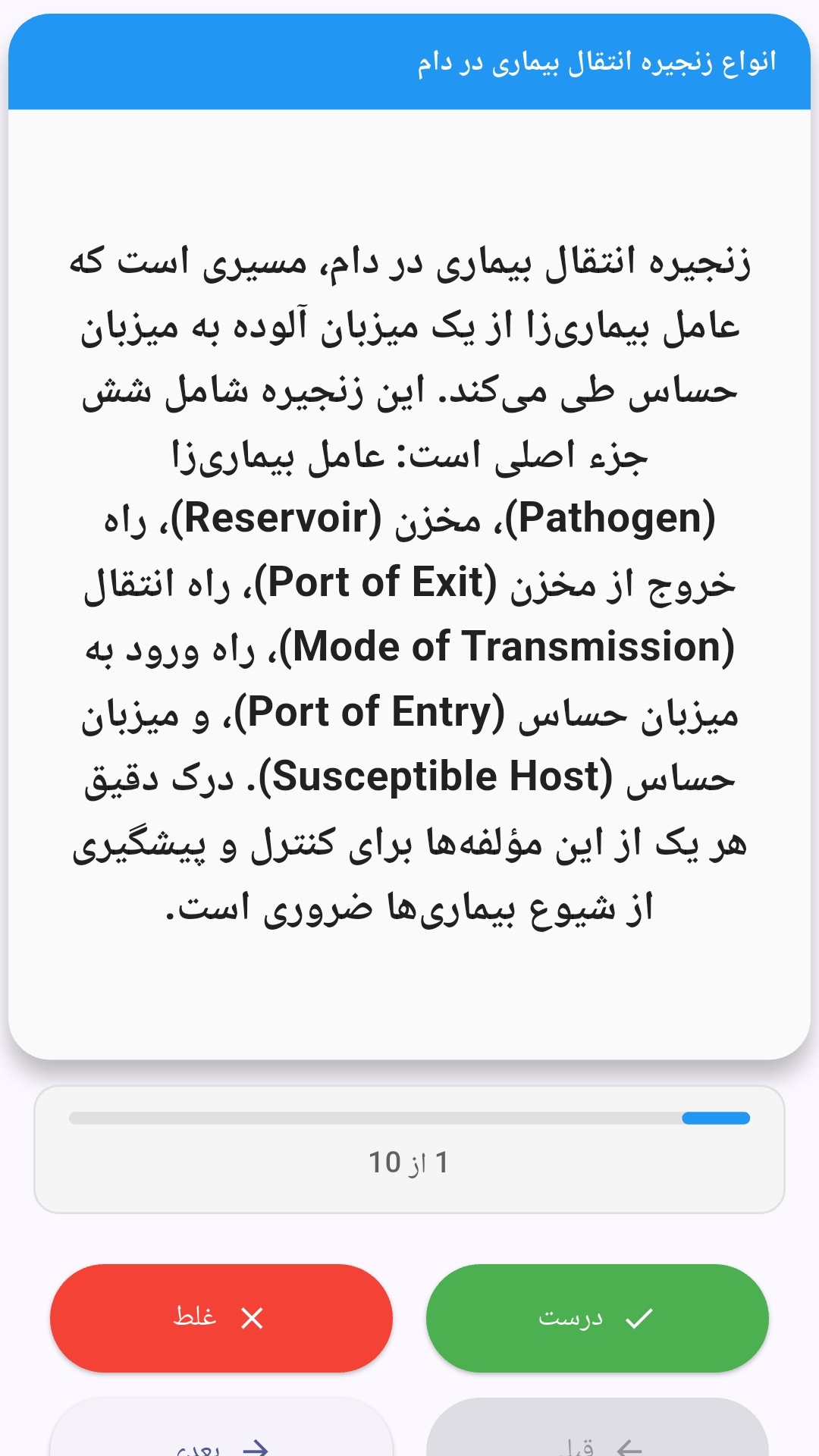
این اپلیکیشن فارسی برای یادگیری و مرور محتوای آموزشی از طریق فلشکارت طراحی شده است. کارتها را یکییکی مرور کنید، پاسخ پرسشها را به یاد بیاورید و نتیجه هر پاسخ را ثبت کنید. محتوای دوره پس از نصب درون برنامه در دسترس است تا برای مطالعه روزمره معمولاً به اتصال مداوم اینترنت نیاز نداشته باشید.
محتوای آموزشی در قالبهای متنوع ارائه میشود تا هم برای یادگیری مفاهیم جدید و هم برای تثبیت آموختهها قابل استفاده باشد.
- رابط کاربری فارسی و راستچین با فونت وزیر.
- تم روشن و تیره مطابق تنظیمات سیستم.
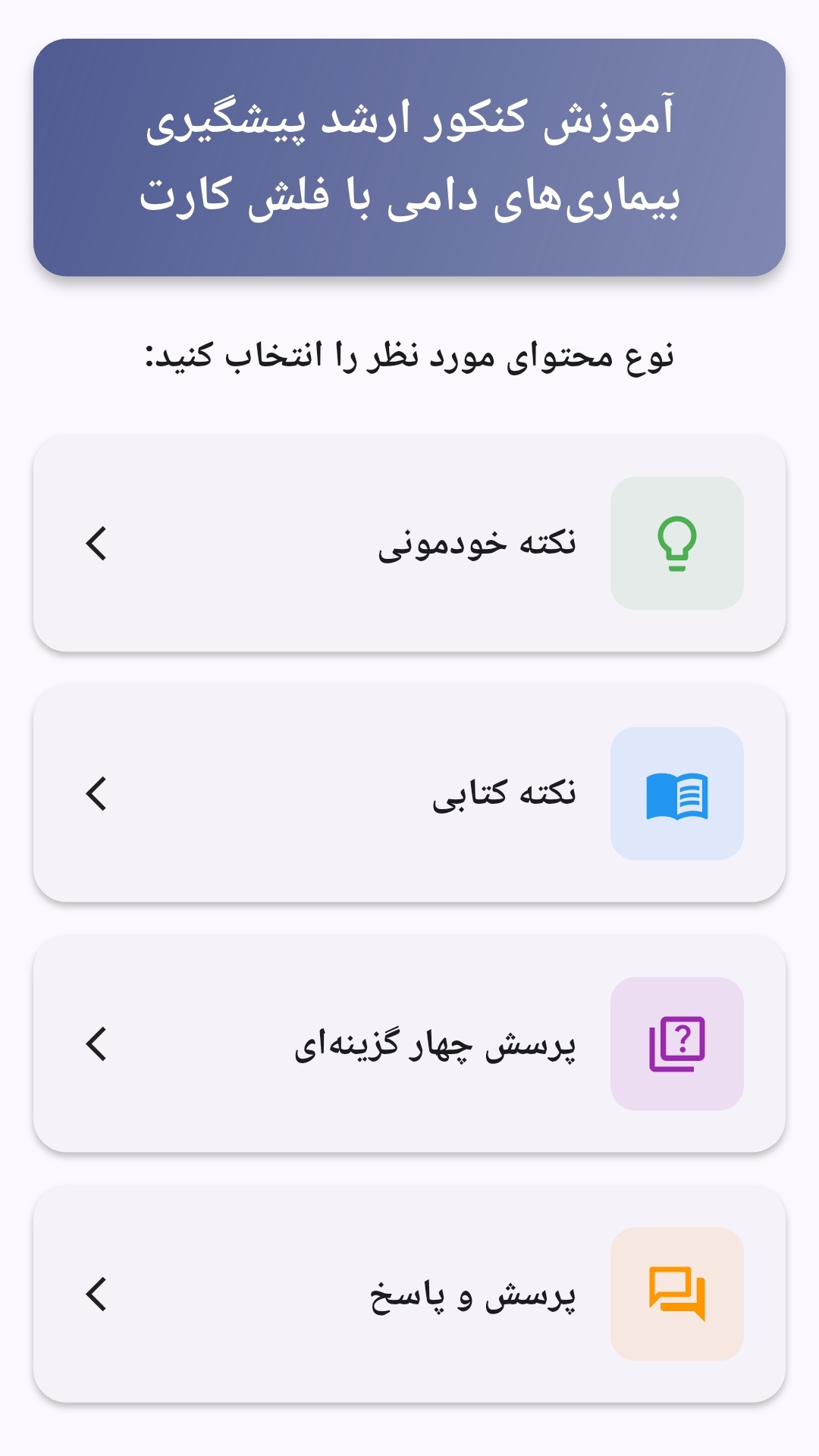
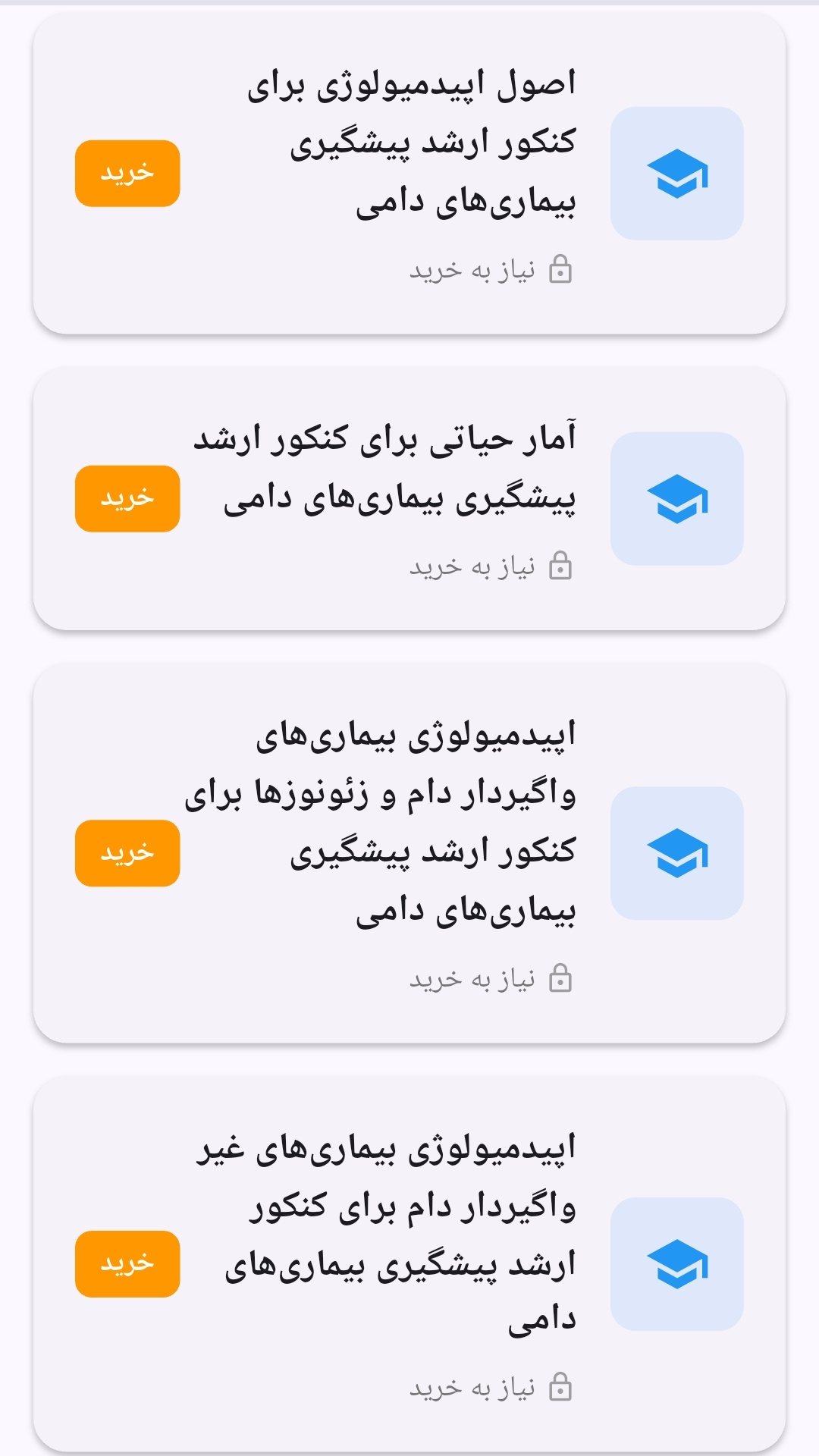
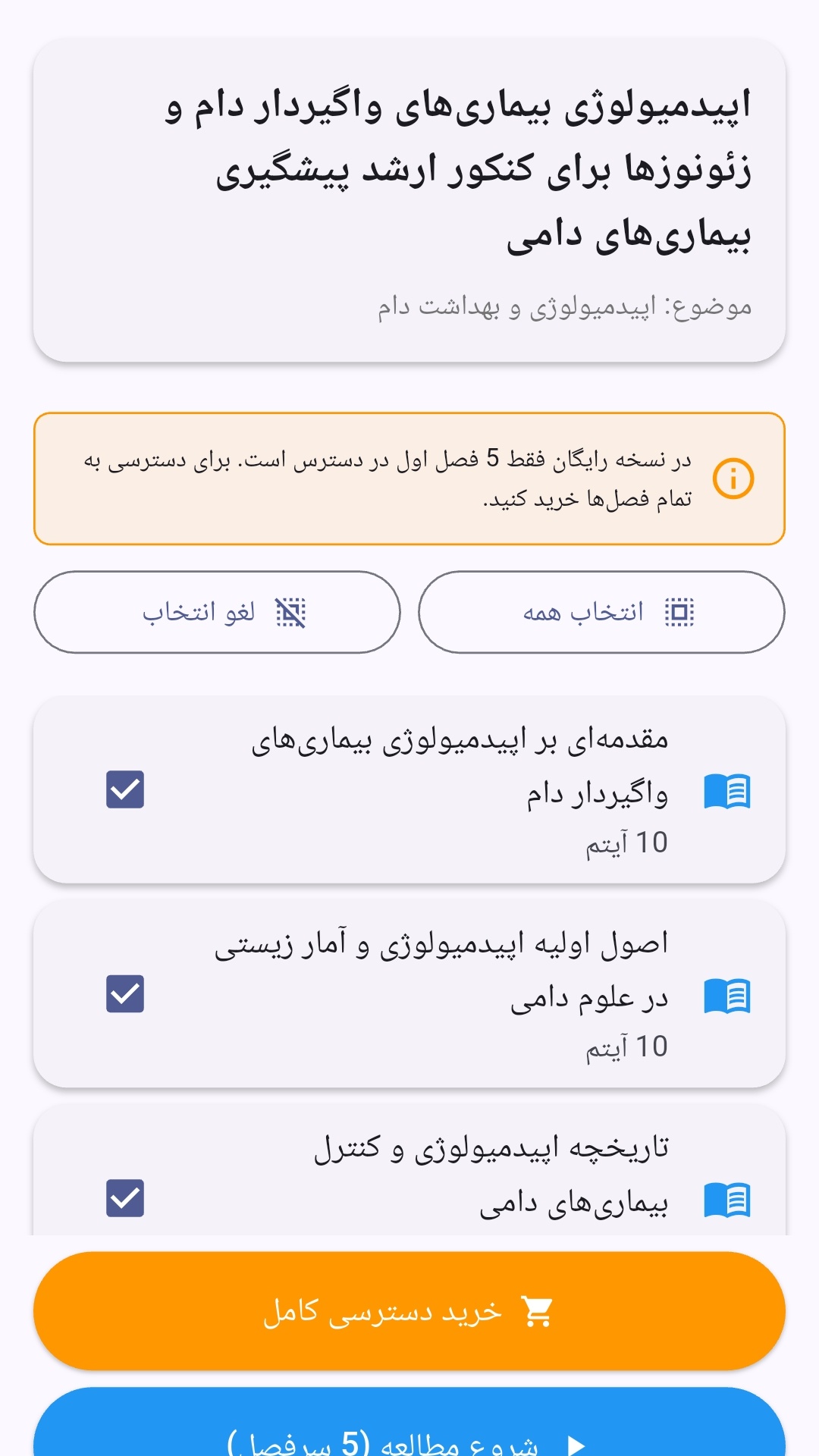
- صفحهبندی ساده برای انتخاب دوره و شروع مرور.
- نمایش تعداد دفعات مرور هر فصل.
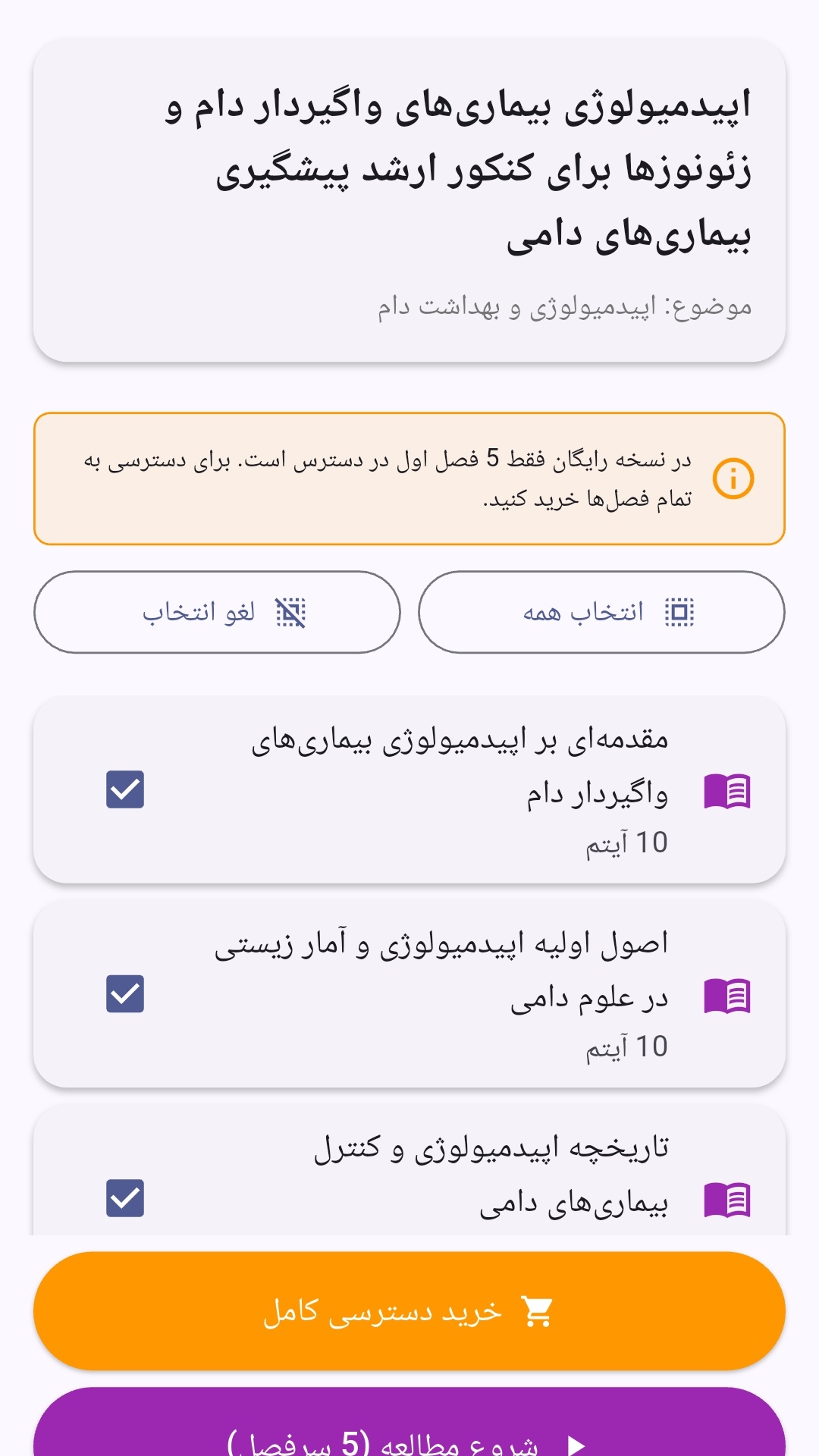
- انتخاب چند فصل برای مرور همزمان.
- امکان تمرکز بر فصلهایی که هنوز مرور نشدهاند.
این اپلیکیشن برای دانشآموزان، دانشجویان، داوطلبان آزمونها و علاقهمندان به یادگیری طراحی شده است؛ بهویژه کسانی که میخواهند مطالب آموزشی را در زمانهای کوتاه مرور کنند، دانستههای خود را بسنجند و مطالعه منظمتری داشته باشند.
نظرات
هنوز نظری ثبت نشده است.
وارد شوید تا نظر ثبت کنید.