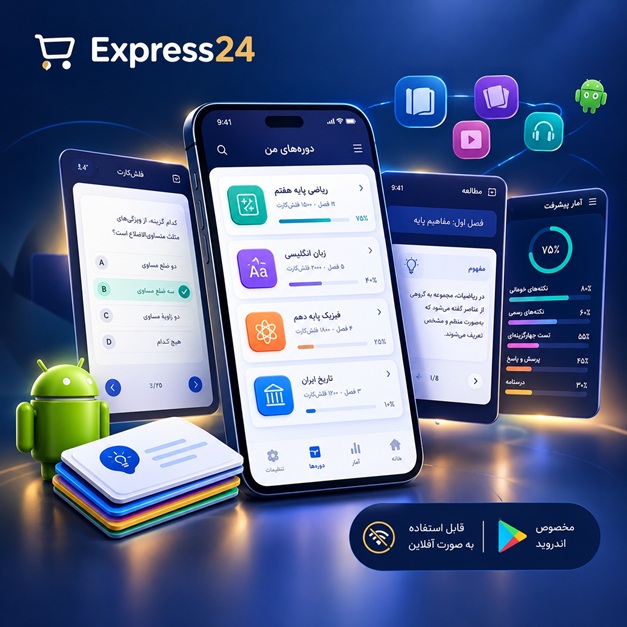
اپلیکیشن اندرویدی فلشکارت آموزشی زبان انگلیسی برای مهندسان در ارزیابی ریسک فنی
🎓 دوره آموزشی جامع
📚 اطلاعات دوره
عنوان دوره: دوره زبان انگلیسی برای مهندسان در ارزیابی ریسک فنی
موضوع کلی: آموزش زبانهای خارجی
موضوع میانی: زبان در حوزه مهندسی
📋 سرفصلهای دوره
- 1. Introduction to the Course: Aims and Objectives
- 2. Review of Basic English Grammar for Engineers
- 3. Sentence Structure for Technical Communication
- 4. Understanding Verb Tenses in Technical Contexts
- 5. Using the Passive Voice for Describing Processes
- 6. Modal Verbs for Obligation, Possibility, and Advice
- 7. Vocabulary Building Strategies for Technical Fields
- 8. Reading Technical Texts: Skimming and Scanning
- 9. Reading Technical Texts: Detailed Comprehension
- 10. Identifying Main Ideas and Supporting Details
- 11. Writing Clear and Concise Sentences
- 12. Paragraph Structure in Technical Writing
- 13. Basic Email Etiquette for Professional Communication
- 14. Understanding Common Engineering Abbreviations
- 15. Introduction to Technical Glossaries and Dictionaries
- 16. What is Risk? Definitions and Basic Concepts
- 17. Differentiating Hazard, Risk, and Consequence
- 18. Understanding Likelihood and Probability
- 19. Defining Severity and and Impact
- 20. The Risk Assessment Process: An Overview
- 21. Types of Risk: Technical, Financial, Operational, etc.
- 22. Introduction to Risk Management Principles
- 23. The Importance of Risk Assessment in Engineering
- 24. Key Stakeholders in Risk Assessment
- 25. Understanding Regulatory Frameworks and Standards (Intro)
- 26. Ethical Considerations in Risk Management
- 27. Risk Perception and Communication Challenges
- 28. Sources of Risk Information in Engineering
- 29. Risk Tolerance and Acceptance Criteria
- 30. Case Study Introduction: A Simple Engineering Risk
- 31. Vocabulary for Mechanical Hazards (e.g., rotating parts, pinch points)
- 32. Vocabulary for Electrical Hazards (e.g., shock, arc flash, short circuit)
- 33. Vocabulary for Chemical Hazards (e.g., toxicity, flammability, corrosivity)
- 34. Vocabulary for Physical Hazards (e.g., noise, vibration, radiation, temperature)
- 35. Vocabulary for Ergonomic Hazards (e.g., repetitive strain, poor posture)
- 36. Vocabulary for Biological Hazards (e.g., bacteria, viruses, allergens)
- 37. Vocabulary for Environmental Hazards (e.g., pollution, contamination, spills)
- 38. Vocabulary for Process Hazards (e.g., overpressure, runaway reaction)
- 39. Vocabulary for Structural Hazards (e.g., collapse, fatigue, instability)
- 40. Vocabulary for Software/System Hazards (e.g., bug, malfunction, data loss)
- 41. Vocabulary for Human Factors/Error (e.g., oversight, fatigue, misjudgment)
- 42. Verbs for Identifying Hazards (e.g., detect, pinpoint, recognize)
- 43. Adjectives for Describing Hazards (e.g., latent, acute, chronic, inherent)
- 44. Nouns for Hazard-Related Equipment (e.g., pressure vessel, pipeline, conveyor)
- 45. Nouns for Hazard-Related Materials (e.g., solvent, acid, combustible gas)
- 46. Terms for Hazard Scenarios (e.g., spill, leak, explosion, fire)
- 47. Identifying Control Measures: General Terms
- 48. Vocabulary for Personal Protective Equipment (PPE)
- 49. Vocabulary for Engineering Controls (e.g., guarding, ventilation, interlock)
- 50. Vocabulary for Administrative Controls (e.g., procedures, training, permits)
- 51. Vocabulary for Describing Consequences (e.g., injury, fatality, minor/major damage)
- 52. Vocabulary for Financial Consequences (e.g., cost, liability, business interruption)
- 53. Vocabulary for Environmental Consequences (e.g., pollution, habitat destruction)
- 54. Vocabulary for Reputational Consequences (e.g., brand damage, public trust)
- 55. Vocabulary for Describing Likelihood (e.g., rare, improbable, possible, frequent, certain)
- 56. Quantifying Likelihood: Probability and Frequency Terms
- 57. Using Adverbs to Qualify Likelihood (e.g., highly unlikely, relatively probable)
- 58. Vocabulary for Risk Levels (e.g., low, medium, high, intolerable)
- 59. Understanding Risk Matrices: Terminology and Application
- 60. Comparing and Contrasting Risk Levels (e.g., higher than, lower than, similar to)
- 61. Cause-and-Effect Relationships in Risk (e.g., due to, resulting in, leads to)
- 62. Expressing Certainty and Uncertainty in Risk Statements
- 63. Language for Risk Tolerance and Acceptance Criteria
- 64. Terms for Risk Treatment Options (e.g., avoid, reduce, transfer, accept)
- 65. Vocabulary for Risk Mitigation Strategies (e.g., implement, improve, strengthen)
- 66. Vocabulary for Risk Control Effectiveness (e.g., effective, inadequate, robust)
- 67. Terms for Residual Risk
- 68. Understanding Risk Registers: Key Terms
- 69. Introduction to Quantitative Risk Assessment (QRA) Vocabulary
- 70. Introduction to Qualitative Risk Assessment Vocabulary
- 71. Vocabulary for Failure Mode and Effects Analysis (FMEA)
- 72. Vocabulary for Hazard and Operability (HAZOP) Studies
- 73. Vocabulary for Fault Tree Analysis (FTA)
- 74. Vocabulary for Event Tree Analysis (ETA)
- 75. Terms for Layer of Protection Analysis (LOPA)
- 76. Reading and Interpreting Risk Assessment Reports (Structure)
- 77. Identifying Key Sections in a Risk Report (e.g., scope, methodology, findings)
- 78. Writing Executive Summaries for Risk Reports
- 79. Crafting Clear and Concise Risk Descriptions
- 80. Formulating Effective Recommendations for Risk Reduction
- 81. Describing Action Plans and Timelines
- 82. Understanding Corrective and Preventive Actions (CAPA)
- 83. Writing Follow-up Reports on Risk Actions
- 84. Using Data and Evidence to Support Risk Findings
- 85. Citing Standards and Regulations in Risk Documents
- 86. Participating in Risk Review Meetings: Key Phrases
- 87. Asking Clarifying Questions in Risk Discussions
- 88. Expressing Opinions and Disagreements Professionally
- 89. Presenting Risk Findings to Technical Teams
- 90. Using Visual Aids Effectively in Risk Presentations
- 91. Presenting Risk Findings to Non-Technical Stakeholders
- 92. Explaining Complex Risk Concepts Simply
- 93. Responding to Challenging Questions About Risk
- 94. Leading a Discussion on Risk Mitigation Strategies
- 95. Writing Professional Emails for Risk Communication
- 96. Drafting Incident Reports with a Risk Focus
- 97. Communicating Urgent Risk Information
- 98. Negotiating Risk Reduction Proposals
- 99. Understanding Cross-Cultural Communication in Risk Management
- 100. Course Review and Future Development
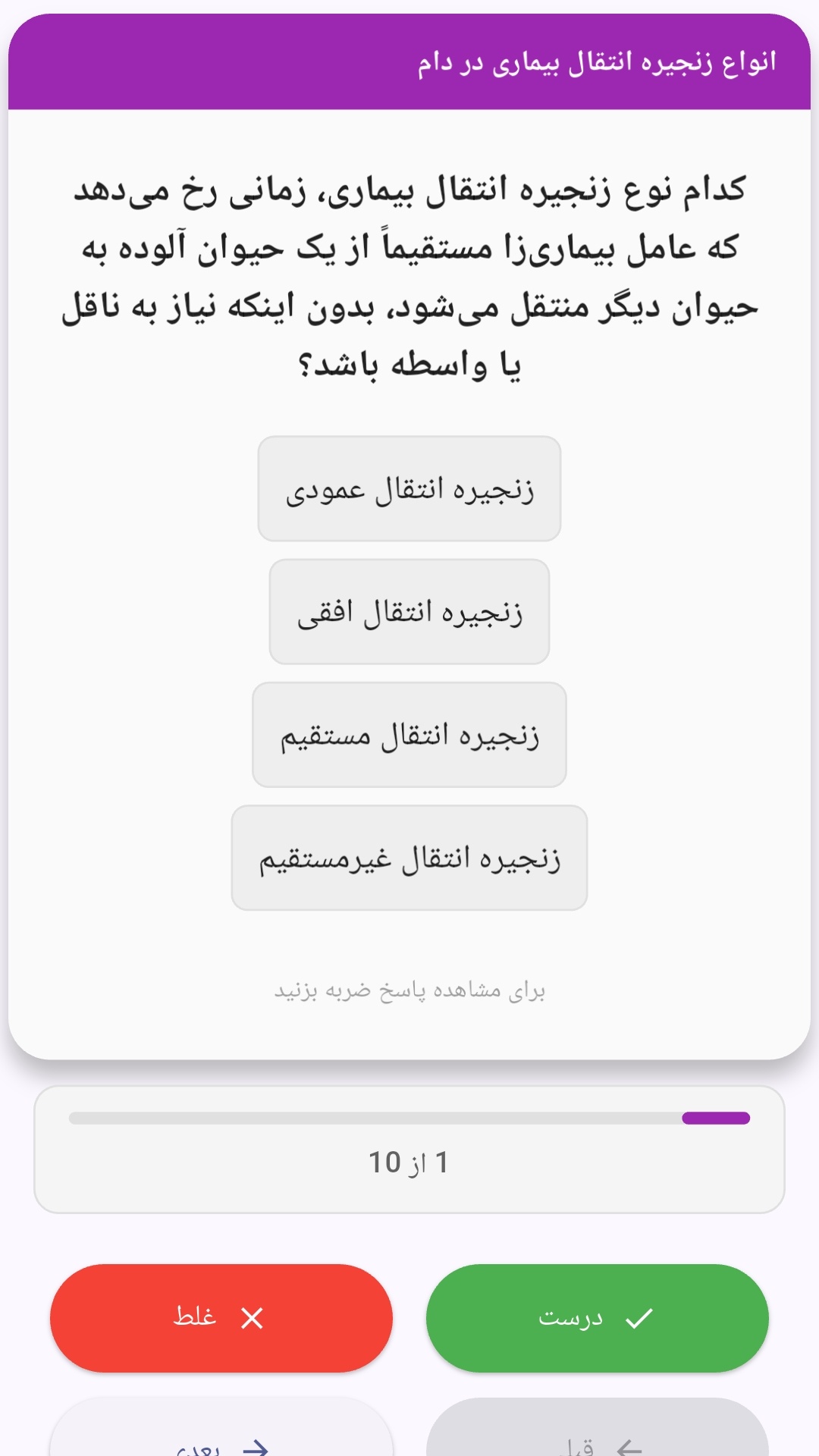
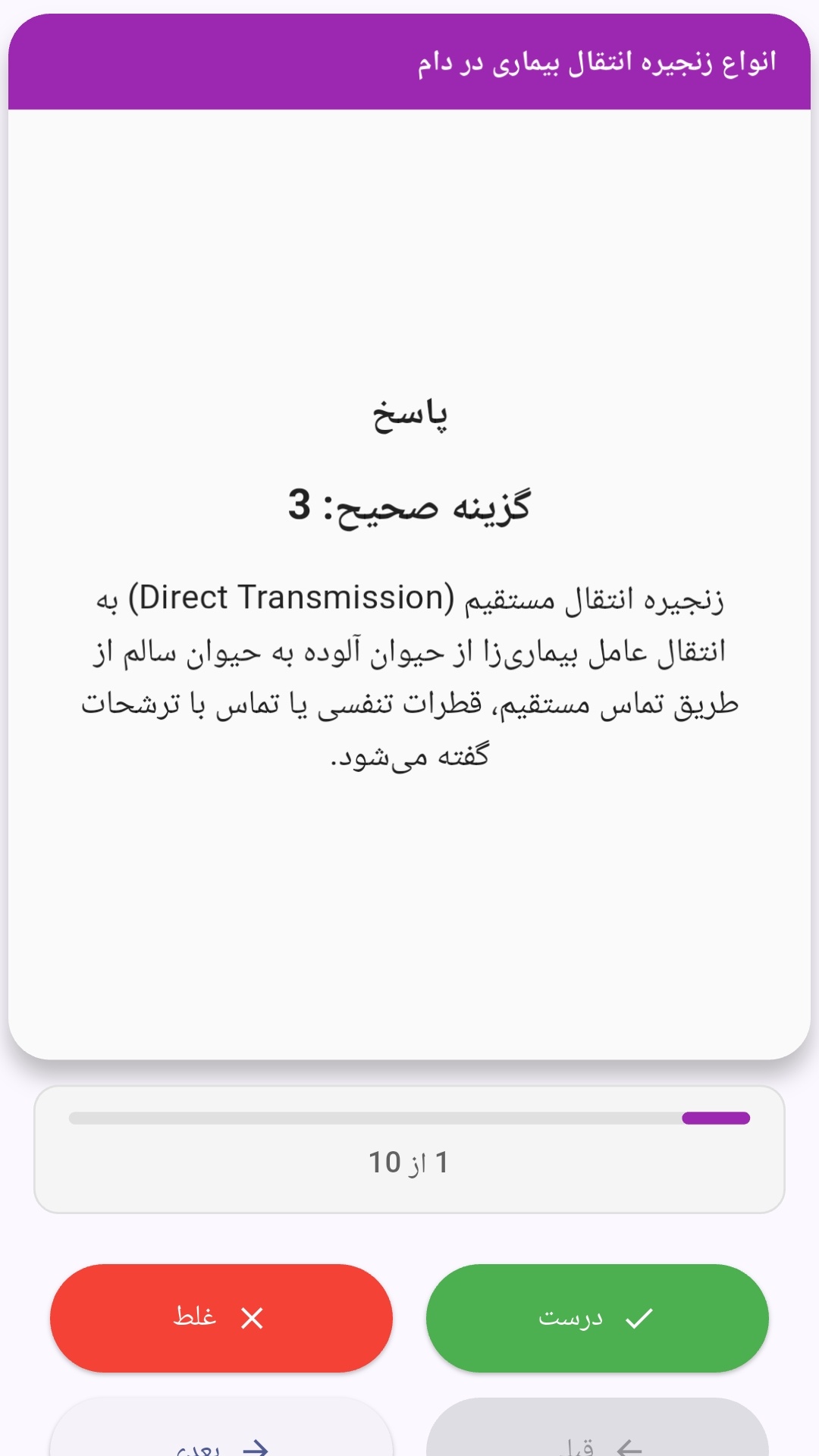
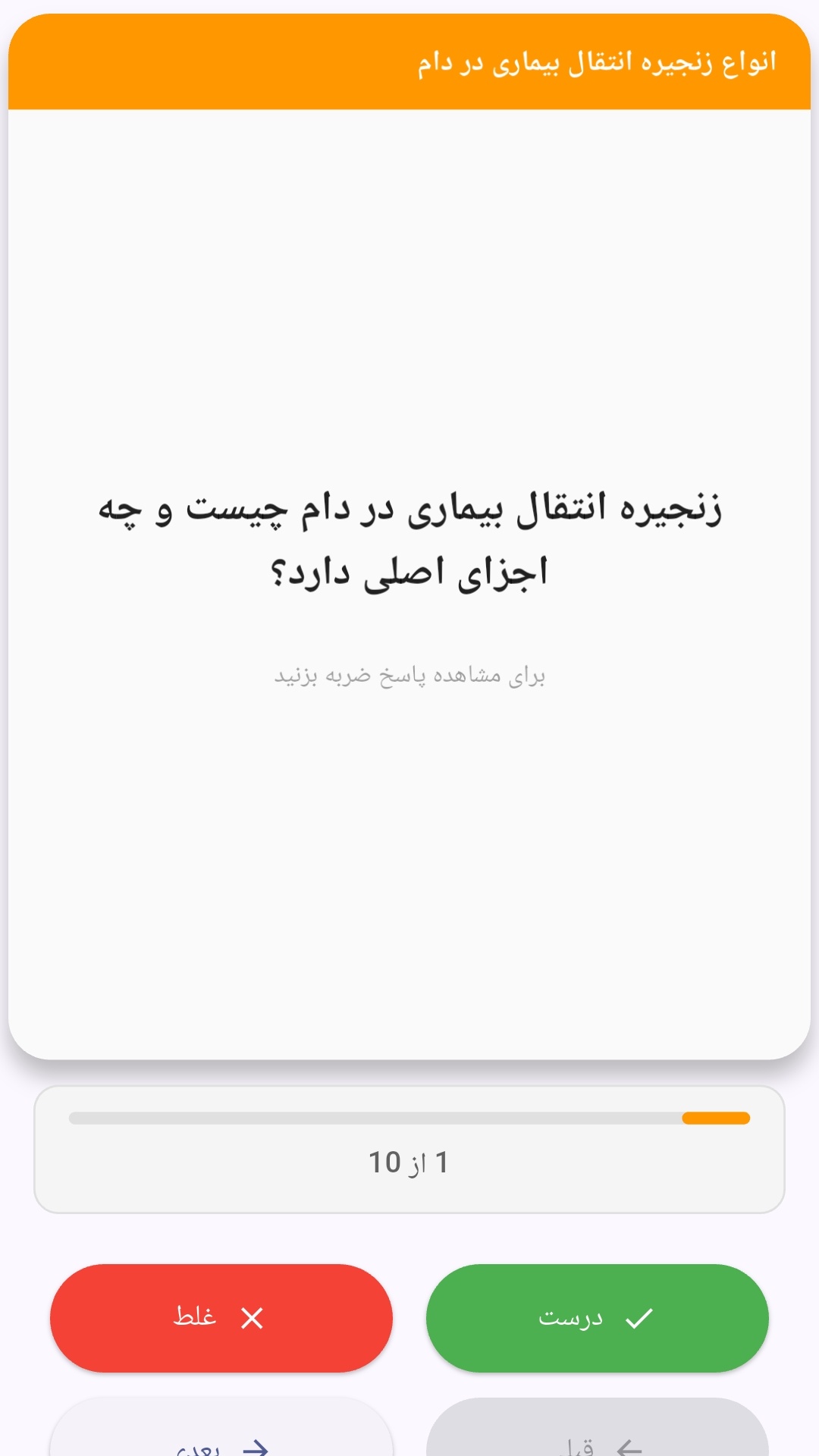
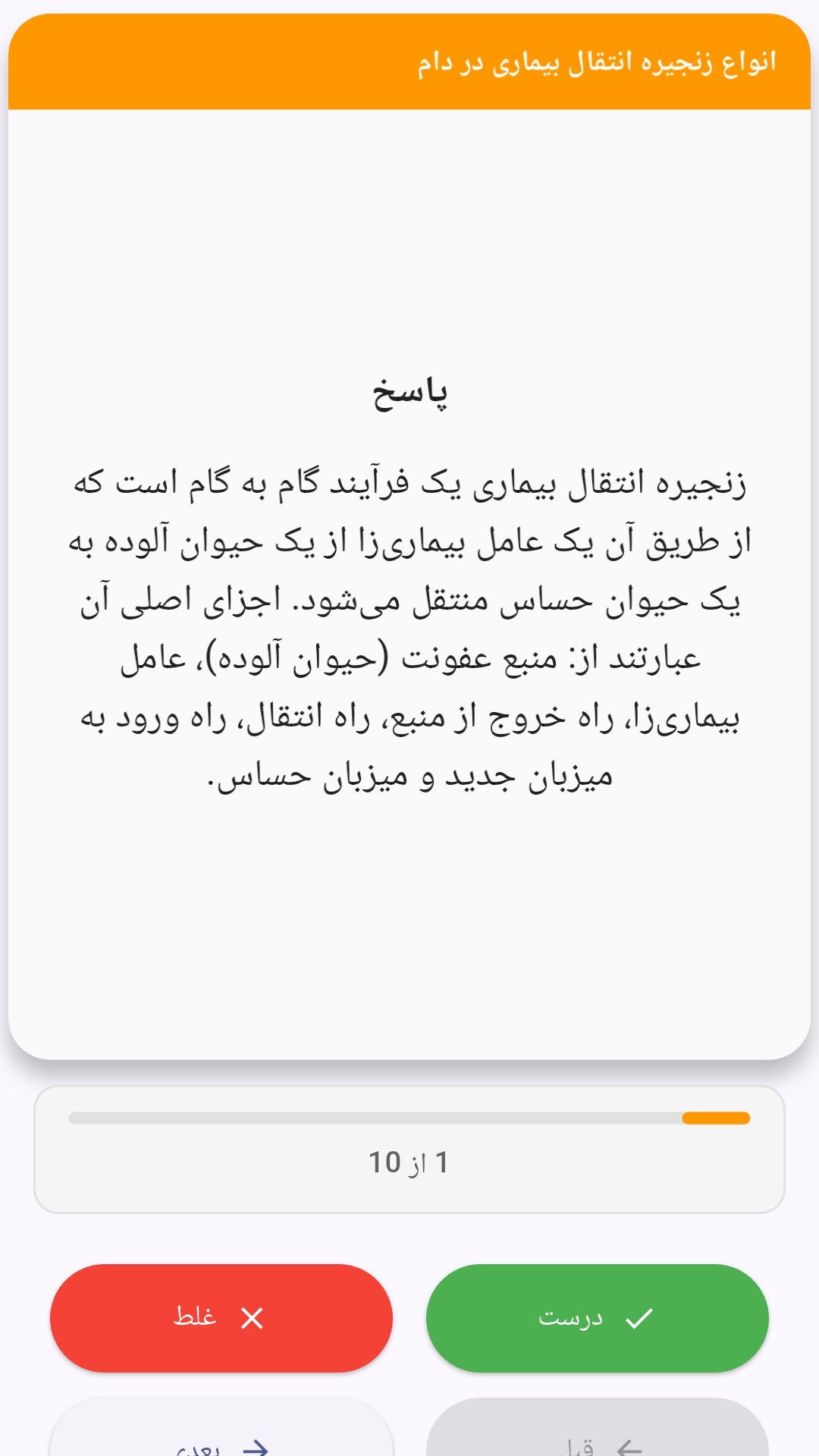
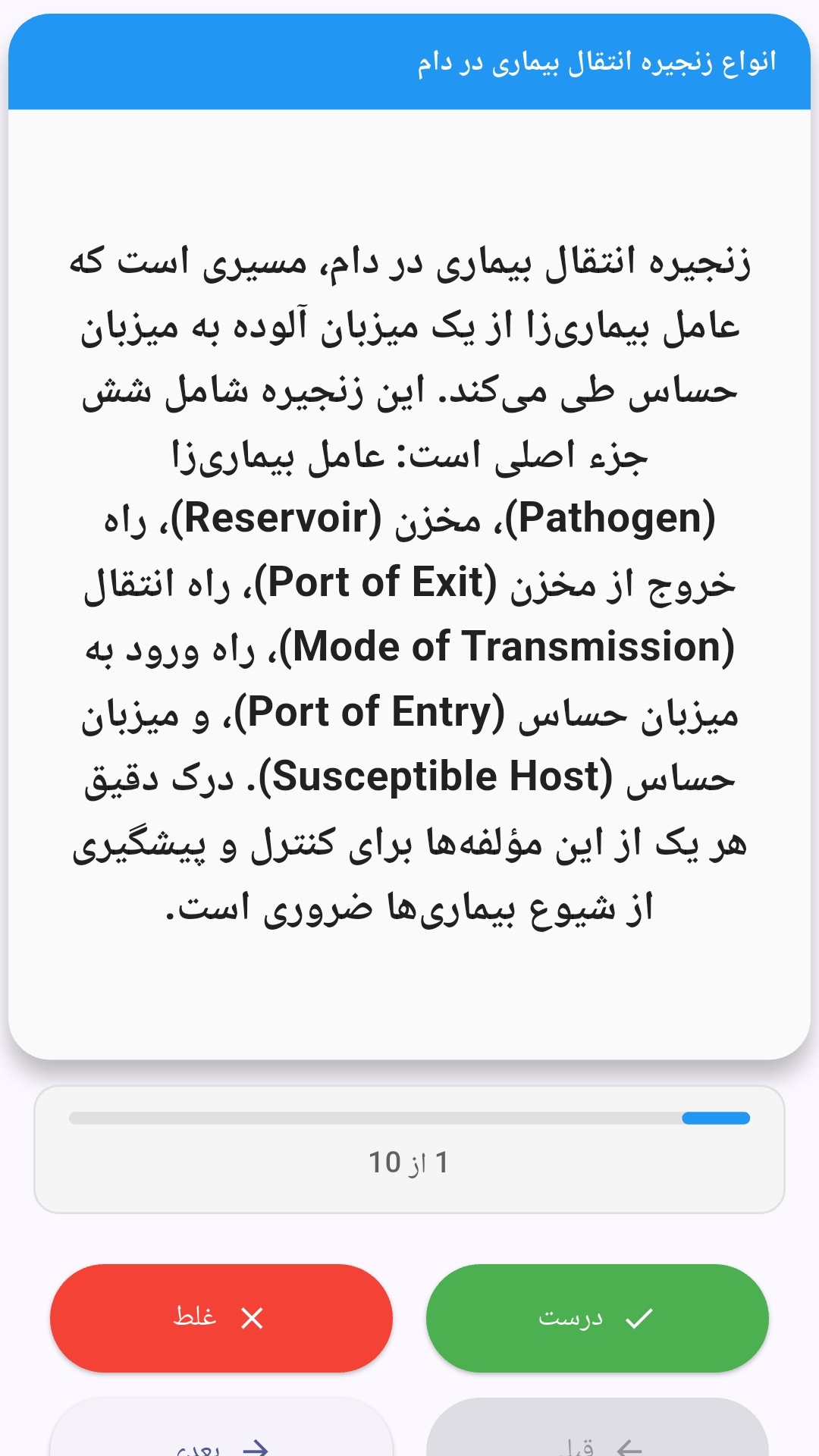
این اپلیکیشن فارسی برای یادگیری و مرور محتوای آموزشی از طریق فلشکارت طراحی شده است. کارتها را یکییکی مرور کنید، پاسخ پرسشها را به یاد بیاورید و نتیجه هر پاسخ را ثبت کنید. محتوای دوره پس از نصب درون برنامه در دسترس است تا برای مطالعه روزمره معمولاً به اتصال مداوم اینترنت نیاز نداشته باشید.
محتوای آموزشی در قالبهای متنوع ارائه میشود تا هم برای یادگیری مفاهیم جدید و هم برای تثبیت آموختهها قابل استفاده باشد.
- رابط کاربری فارسی و راستچین با فونت وزیر.
- تم روشن و تیره مطابق تنظیمات سیستم.
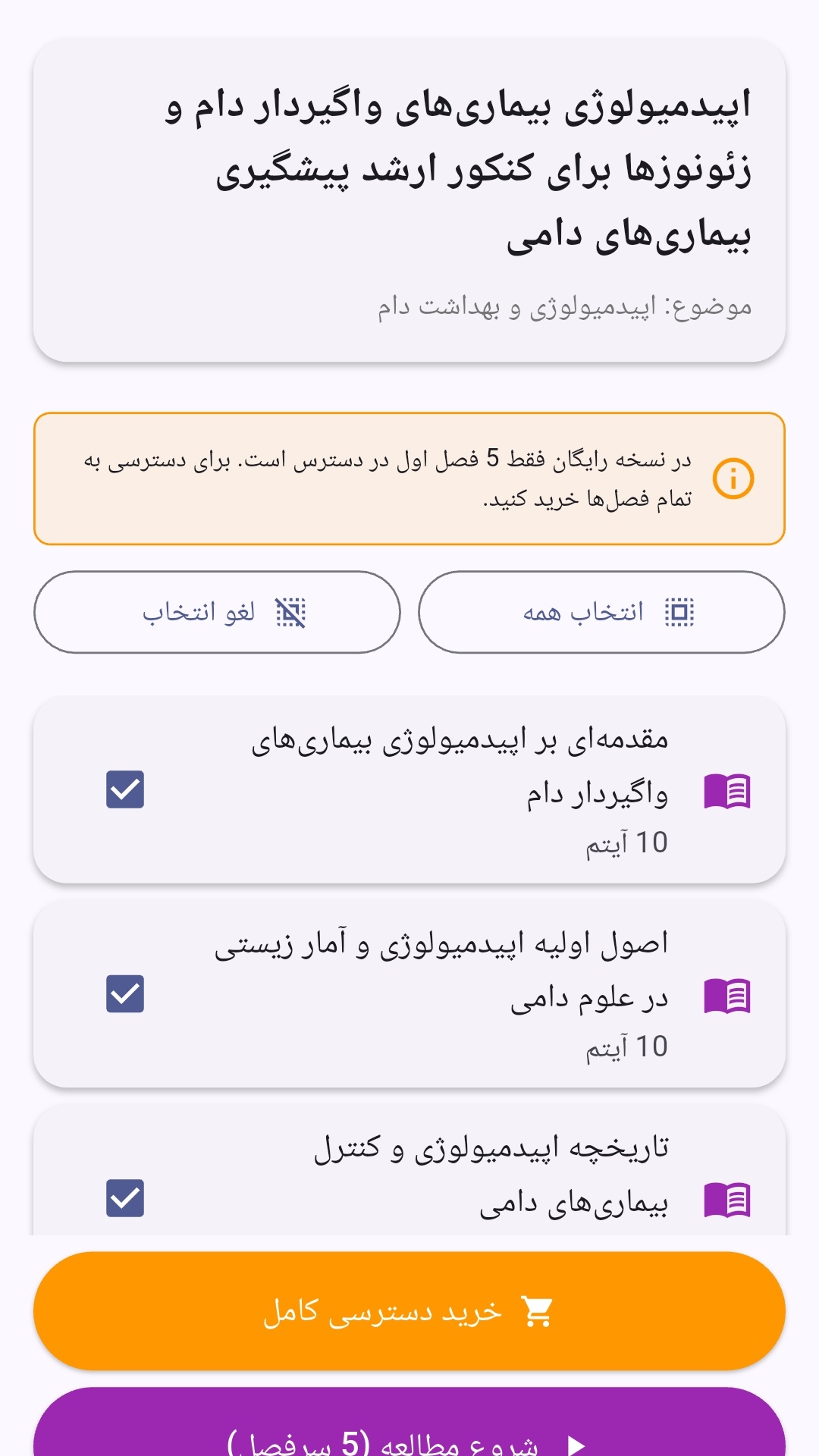
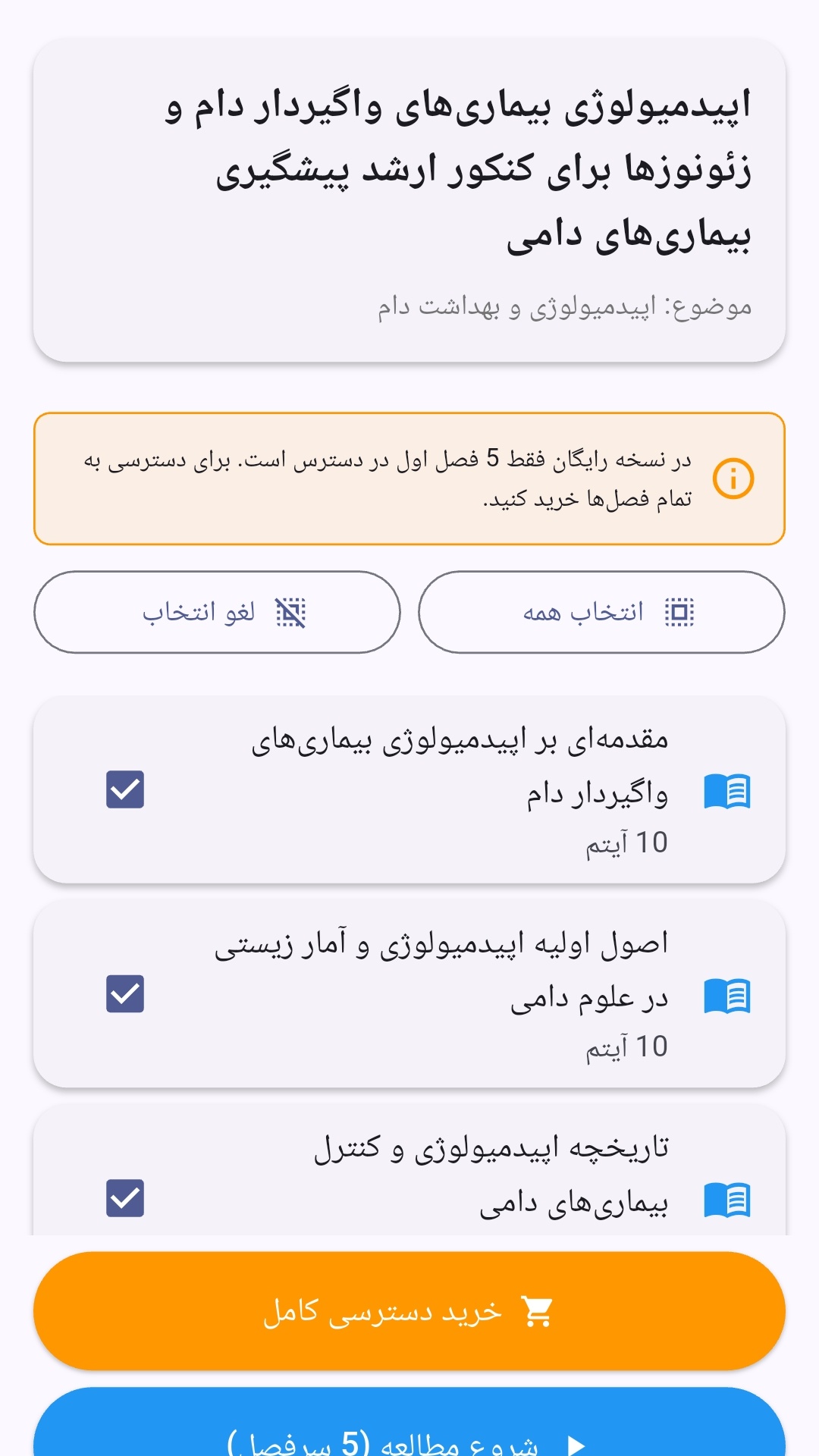
- صفحهبندی ساده برای انتخاب دوره و شروع مرور.
- نمایش تعداد دفعات مرور هر فصل.
- انتخاب چند فصل برای مرور همزمان.
- امکان تمرکز بر فصلهایی که هنوز مرور نشدهاند.
این اپلیکیشن برای دانشآموزان، دانشجویان، داوطلبان آزمونها و علاقهمندان به یادگیری طراحی شده است؛ بهویژه کسانی که میخواهند مطالب آموزشی را در زمانهای کوتاه مرور کنند، دانستههای خود را بسنجند و مطالعه منظمتری داشته باشند.
نظرات
هنوز نظری ثبت نشده است.
وارد شوید تا نظر ثبت کنید.