
اپلیکیشن اندرویدی فلشکارت آموزشی Learn TDD in [Number] Days
🎓 دوره آموزشی جامع
📚 اطلاعات دوره
عنوان دوره: دوره Learn TDD in [Number] Days
موضوع کلی: برنامه نویسی
موضوع میانی: توسعه آزمونمحور (TDD)
📋 سرفصلهای دوره
- 1. Welcome to Test-Driven Development (TDD)
- 2. Understanding the Core Concept of TDD
- 3. Why Embrace TDD? Key Benefits for Developers
- 4. TDD's Impact on Software Quality and Design
- 5. Setting the Stage: Your First TDD Environment
- 6. Exploring Common TDD Misconceptions
- 7. A Brief Historical Context of TDD
- 8. TDD vs. Traditional Testing Approaches
- 9. The TDD Mindset: Shifting Your Perspective
- 10. The Red Phase: Writing Your First Failing Test
- 11. Test Runners: Executing Your Tests
- 12. Making the Test Fail Intentionally
- 13. The Test as a Specification
- 14. Introduction to Unit Testing Frameworks
- 15. Structuring Your Test Project
- 16. The Red-Green-Refactor Cycle Explained
- 17. The Green Phase: Writing Minimal Code to Pass
- 18. Ensuring Your Test Passes Correctly
- 19. The Refactor Phase: Improving Code Structure
- 20. Iterating Through the TDD Loop Effectively
- 21. The Importance of Small, Incremental Steps
- 22. Gaining Confidence with Each Passing Test
- 23. Driving Development Through Tests
- 24. When to Stop Writing Tests: Satisfying Requirements
- 25. Understanding Test Coverage Metrics
- 26. The Rhythmic Flow of TDD Practice
- 27. Visualizing the TDD Cycle: A Practical Walkthrough
- 28. Troubleshooting Failing Tests
- 29. Best Practices for Initial Test Setup
- 30. Evolving Your Codebase with TDD
- 31. Principles of Good Unit Tests: The FIRST Acronym
- 32. F - Fast Tests: Ensuring Quick Feedback
- 33. I - Independent Tests: Avoiding Side Effects
- 34. R - Repeatable Tests: Consistent Results
- 35. S - Self-Validating Tests: Clear Pass/Fail
- 36. T - Timely Tests: Writing Before Implementation
- 37. The Arrange-Act-Assert (AAA) Pattern
- 38. Effective Test Naming Conventions
- 39. Crafting Robust Assertions
- 40. Exploring Advanced Assertion Techniques
- 41. Parameterized Tests: Testing Multiple Inputs Efficiently
- 42. Handling Exceptions and Error Paths with TDD
- 43. Testing Edge Cases and Boundary Conditions
- 44. Introduction to Test Doubles: Mocks, Stubs, Fakes, Spies
- 45. Using Mocks for Behavior Verification
- 46. Employing Stubs for Controlled Responses
- 47. Fakes: Simplified Working Implementations
- 48. Spies: Observing Interactions Without Altering Behavior
- 49. Deciding When to Use Which Test Double
- 50. The Dangers of Over-Mocking and Tight Coupling
- 51. Dependency Injection for Testability
- 52. Inversion of Control Containers and TDD
- 53. Achieving Test Isolation: Techniques and Strategies
- 54. Setting Up and Tearing Down Test Fixtures
- 55. Data Builders and Object Mothers for Complex Objects
- 56. TDD for Pure Functions and Utilities
- 57. Applying TDD to Classes and Objects
- 58. Developing Services and Business Logic with TDD
- 59. Testing Data Access Layer (DAL) Components
- 60. TDD for Input Validation Logic
- 61. Building Complex Algorithms with TDD
- 62. TDD for Handling Collections and Iterators
- 63. TDD for Asynchronous Operations (Introduction)
- 64. TDD for Concurrent Code (Introduction)
- 65. Introduction to Testing User Interface (UI) Components
- 66. TDD and External System Integrations (Via Doubles)
- 67. Tackling Legacy Code with TDD: Characterization Tests
- 68. The "Sander's Sprout" Method for Safe Changes
- 69. Refactoring Towards Testability in Legacy Systems
- 70. Strategies for Database Testing in a TDD Context
- 71. The Art of Refactoring: What and Why
- 72. Refactoring as an Integral Part of TDD
- 73. Common Refactoring Techniques: Extract Method
- 74. Common Refactoring Techniques: Rename Variable/Method/Class
- 75. Common Refactoring Techniques: Extract Class/Interface
- 76. Common Refactoring Techniques: Introduce Parameter Object
- 77. Identifying Code Smells That Warrant Refactoring
- 78. Safe Refactoring Practices: Small Steps and Constant Testing
- 79. Leveraging Automated Refactoring Tools
- 80. Clean Code Principles and Their Synergy with TDD
- 81. SOLID Principle: Single Responsibility Principle (SRP)
- 82. SOLID Principle: Open/Closed Principle (OCP)
- 83. SOLID Principle: Liskov Substitution Principle (LSP)
- 84. SOLID Principle: Interface Segregation Principle (ISP)
- 85. SOLID Principle: Dependency Inversion Principle (DIP)
- 86. TDD and Design Patterns: Driving Pattern Implementation
- 87. The Test Pyramid: Structuring Your Testing Strategy
- 88. TDD's Role Within the Test Pyramid (Unit Tests)
- 89. Introduction to Behavior-Driven Development (BDD)
- 90. TDD vs. BDD: Understanding the Differences
- 91. Feature Files and Scenarios in BDD
- 92. TDD and Continuous Integration (CI) Pipelines
- 93. TDD and Continuous Delivery (CD) Benefits
- 94. Pair Programming and Mob Programming with TDD
- 95. TDD in Agile Development Methodologies
- 96. Overcoming Common Challenges and Roadblocks in TDD
- 97. Measuring the Success and ROI of TDD
- 98. Fostering a TDD Culture in Your Team
- 99. Advanced Topics and Future Directions in TDD
- 100. Course Conclusion and Next Steps for Your TDD Journey
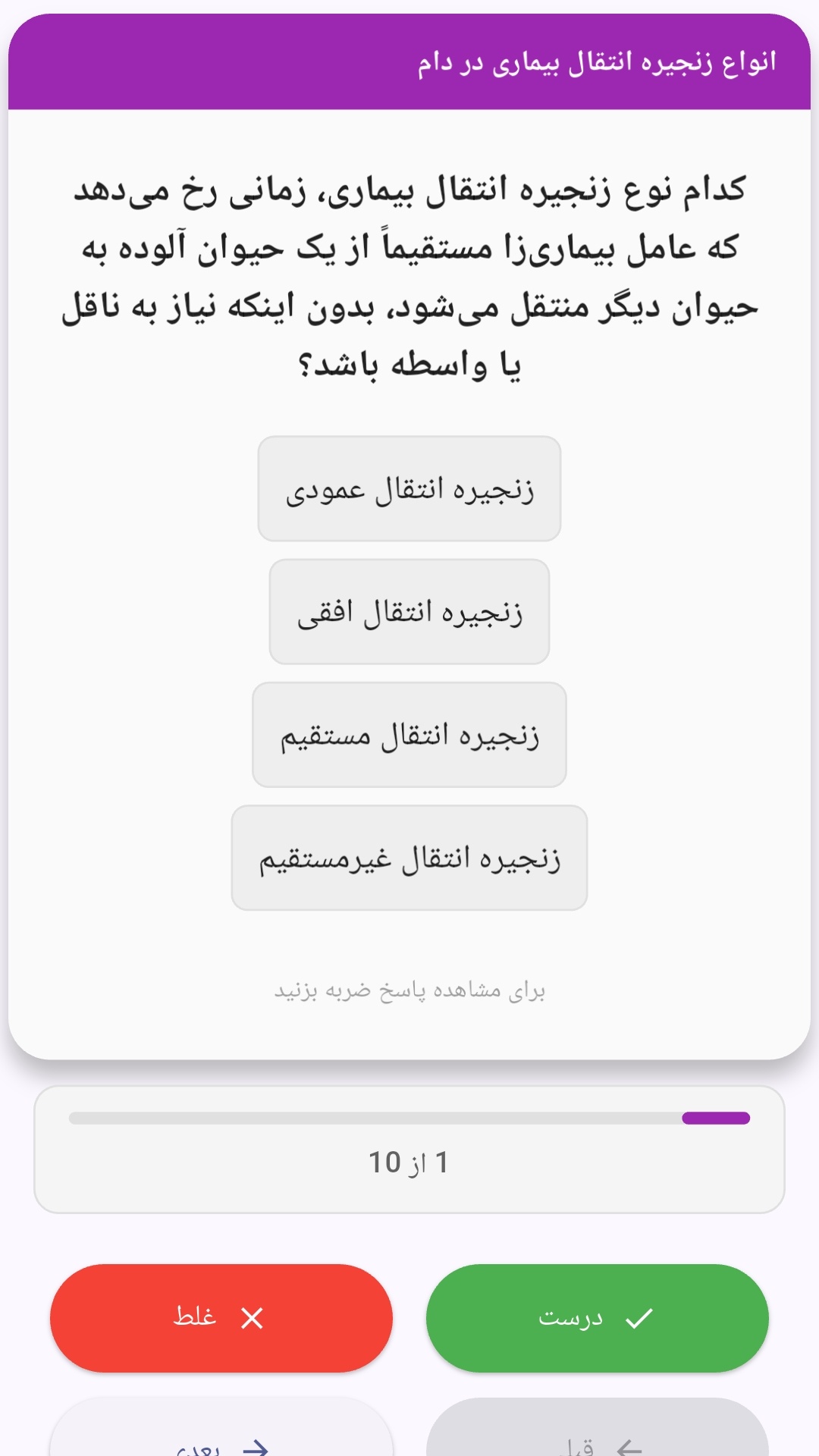
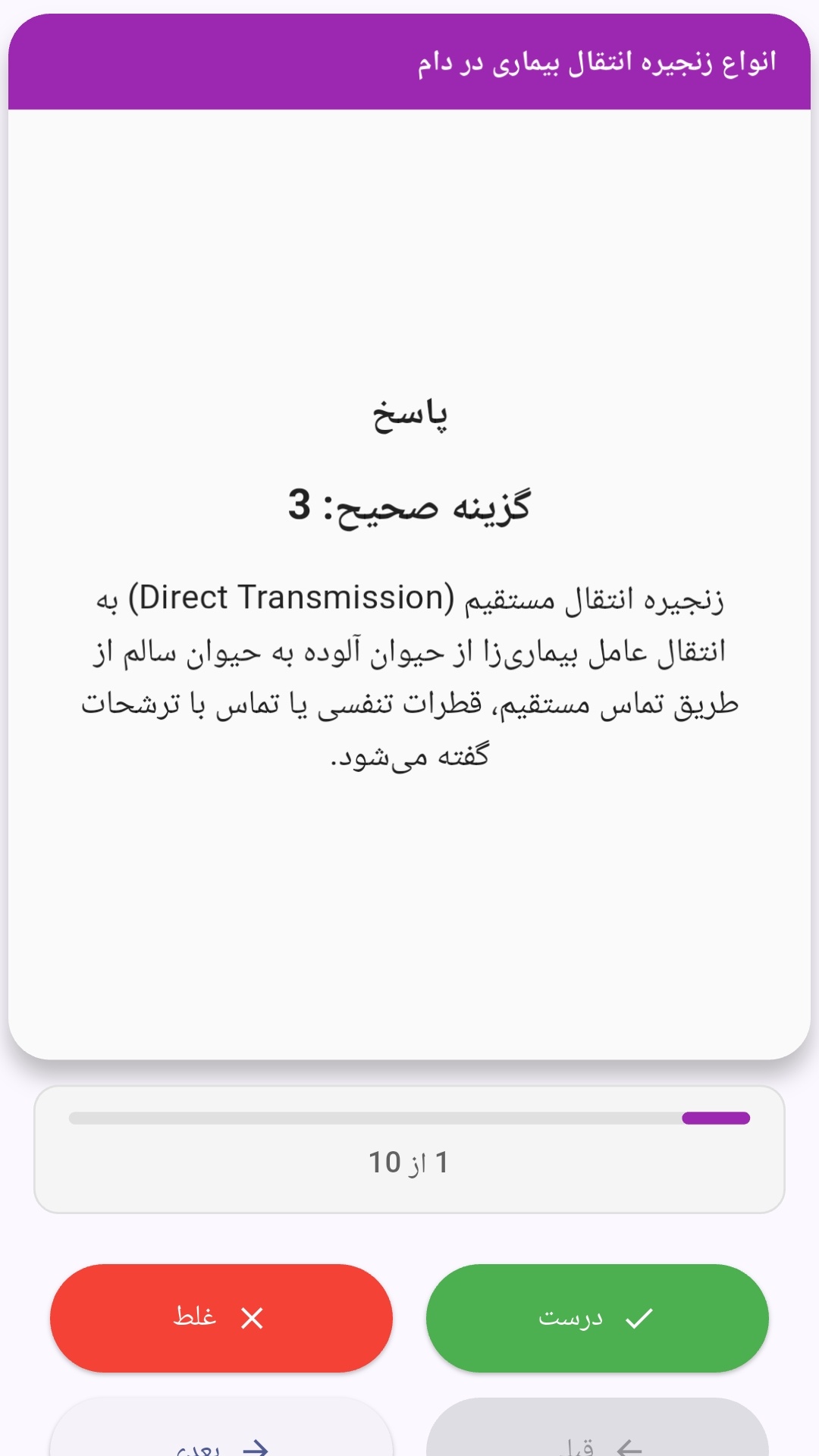
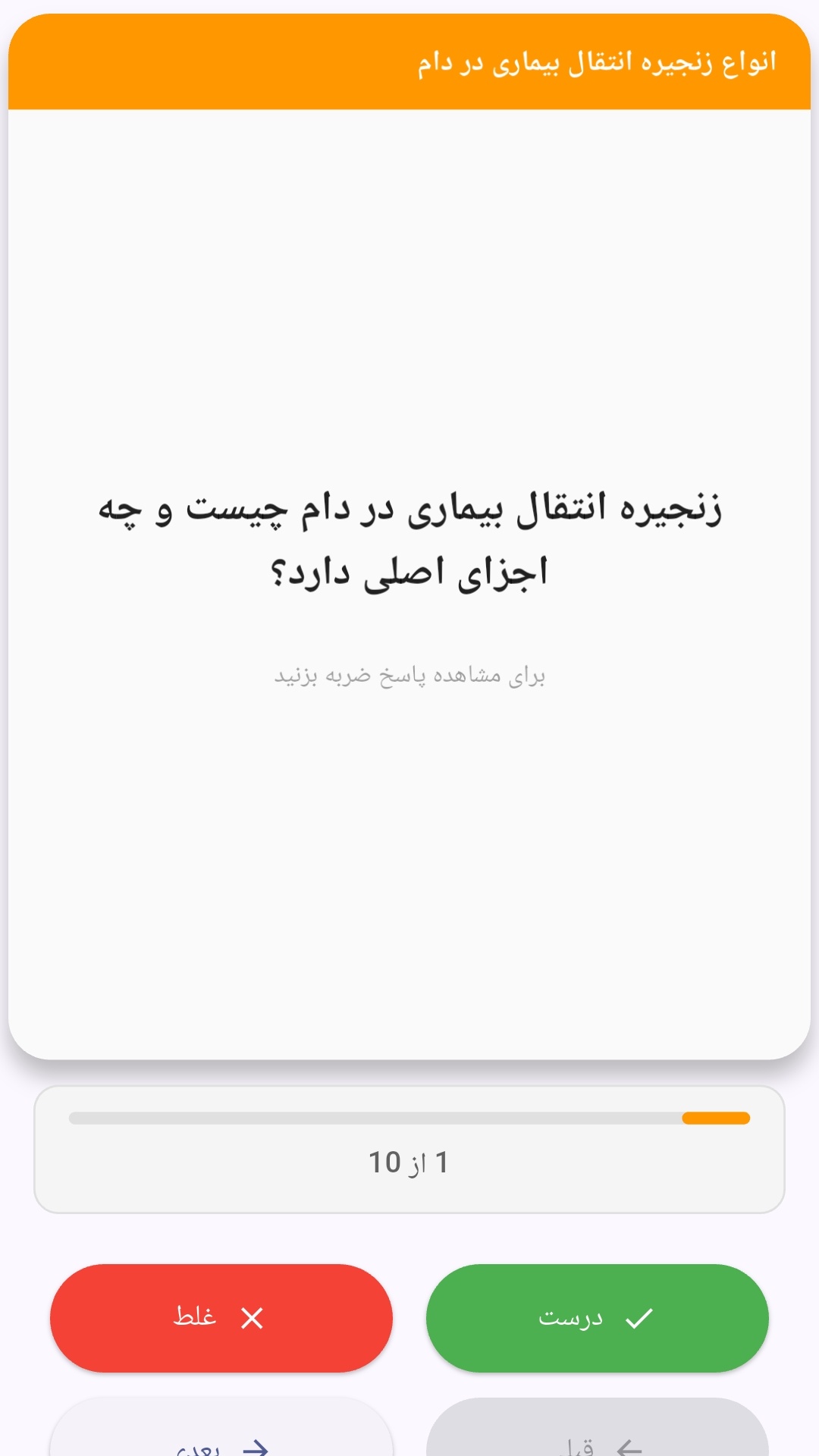
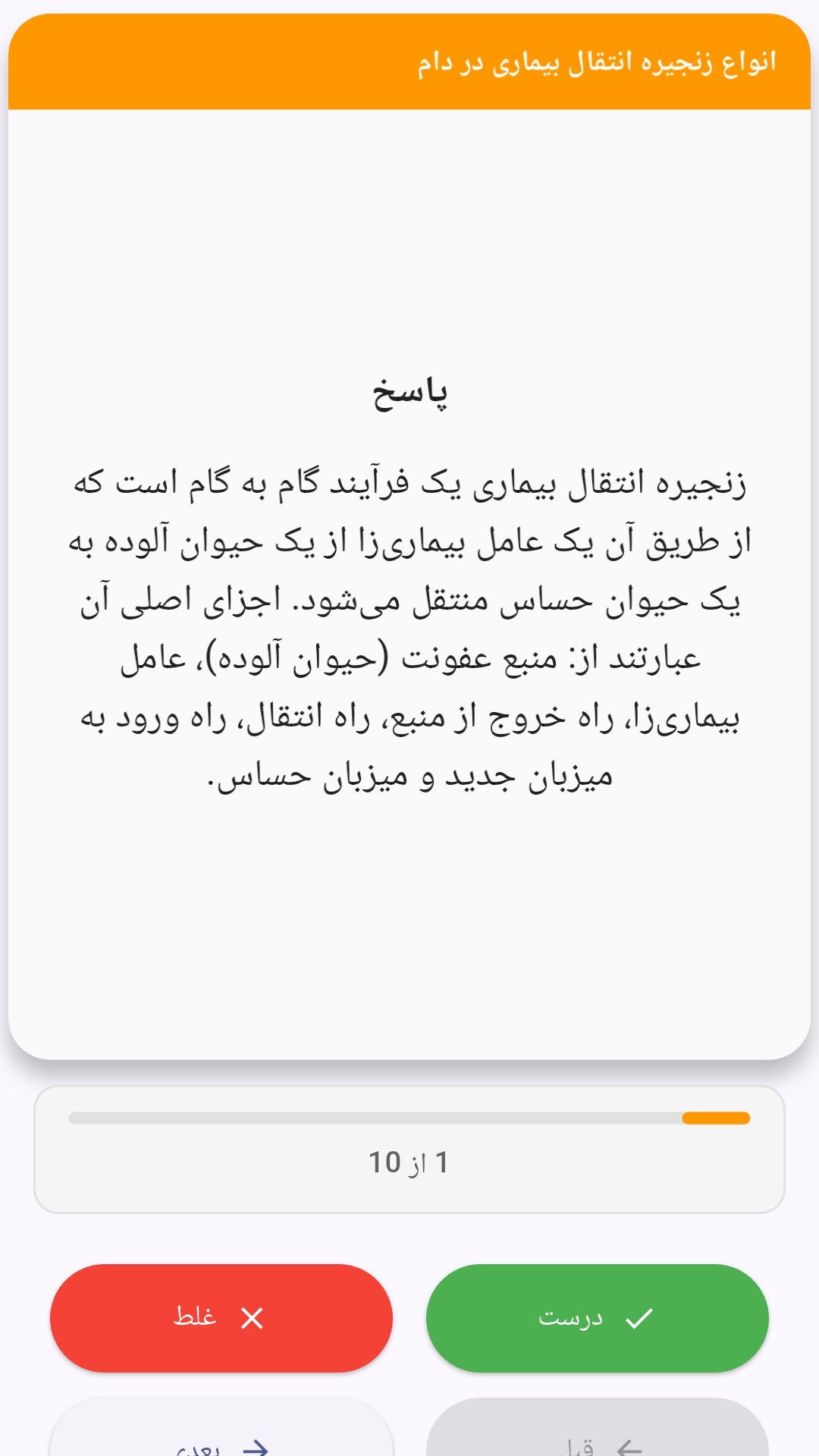
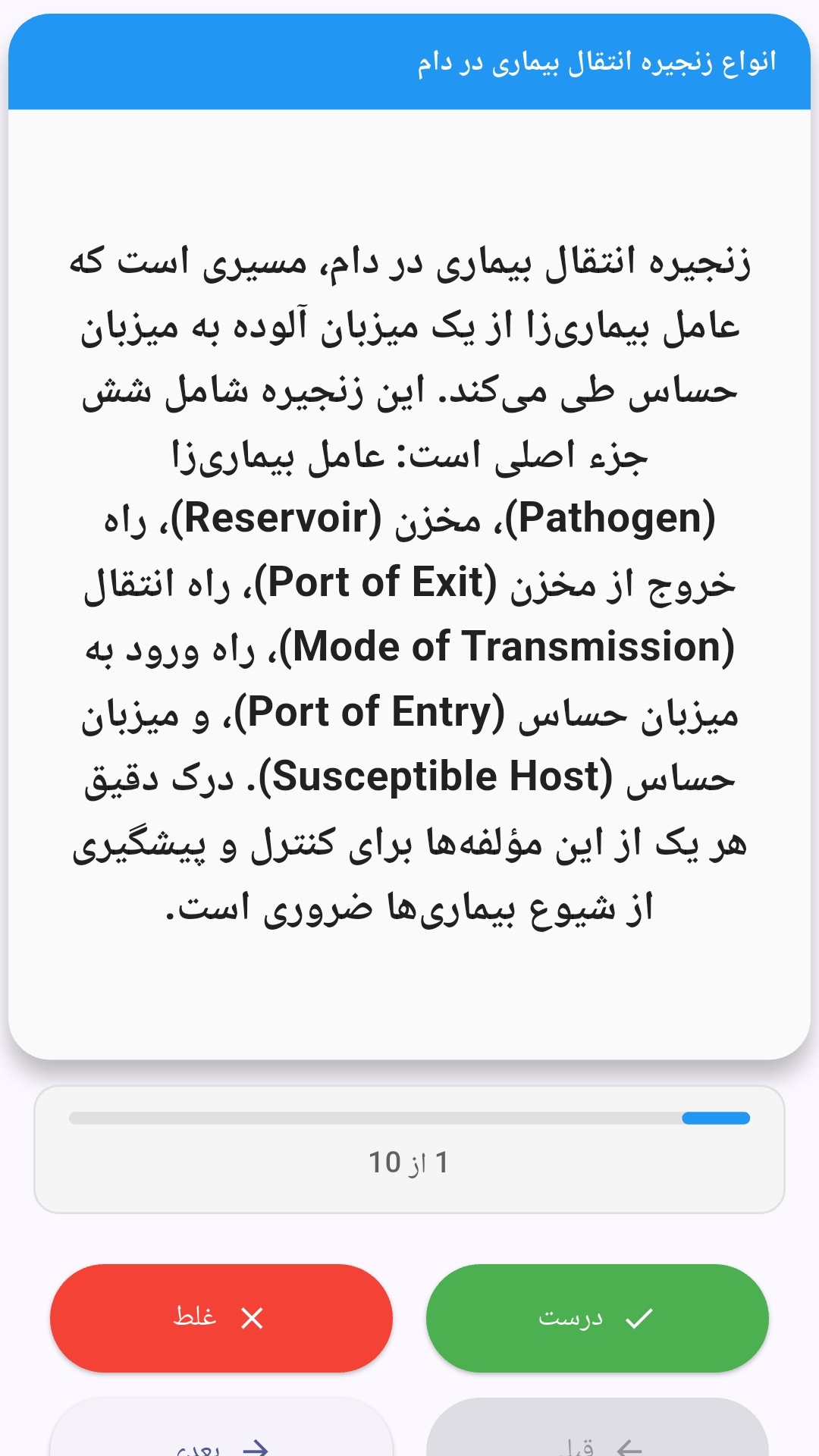
این اپلیکیشن فارسی برای یادگیری و مرور محتوای آموزشی از طریق فلشکارت طراحی شده است. کارتها را یکییکی مرور کنید، پاسخ پرسشها را به یاد بیاورید و نتیجه هر پاسخ را ثبت کنید. محتوای دوره پس از نصب درون برنامه در دسترس است تا برای مطالعه روزمره معمولاً به اتصال مداوم اینترنت نیاز نداشته باشید.
محتوای آموزشی در قالبهای متنوع ارائه میشود تا هم برای یادگیری مفاهیم جدید و هم برای تثبیت آموختهها قابل استفاده باشد.
- رابط کاربری فارسی و راستچین با فونت وزیر.
- تم روشن و تیره مطابق تنظیمات سیستم.
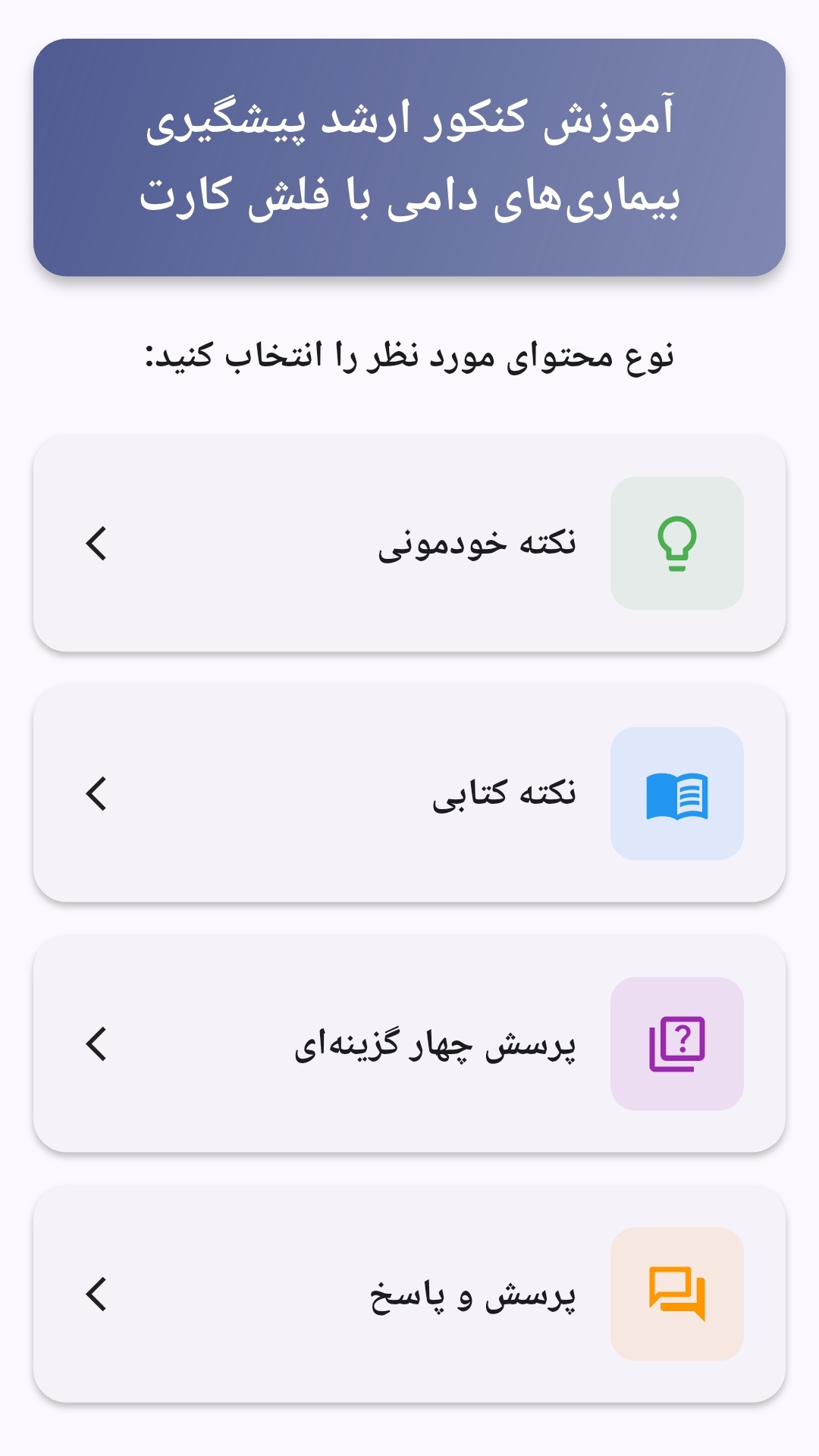
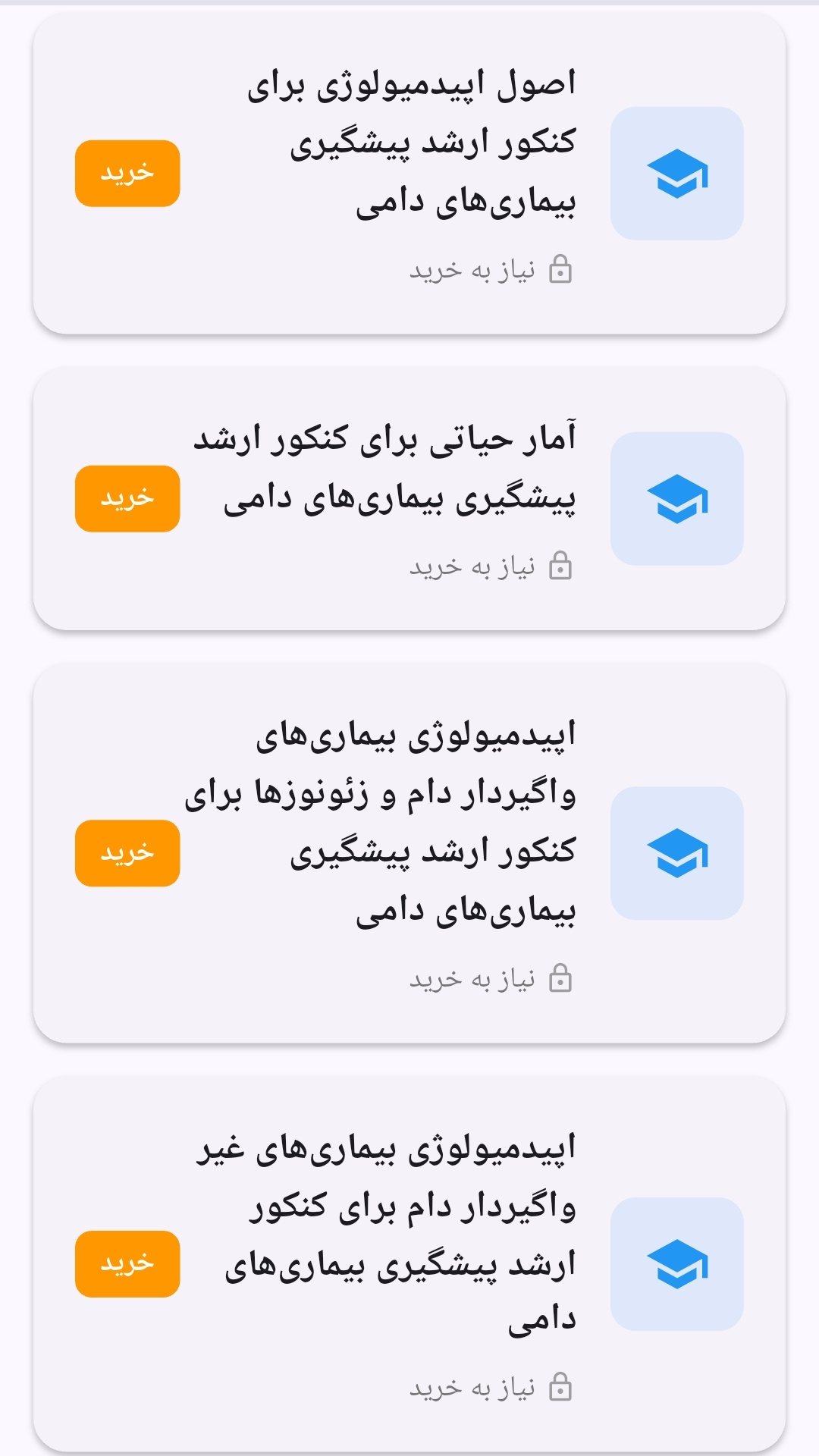
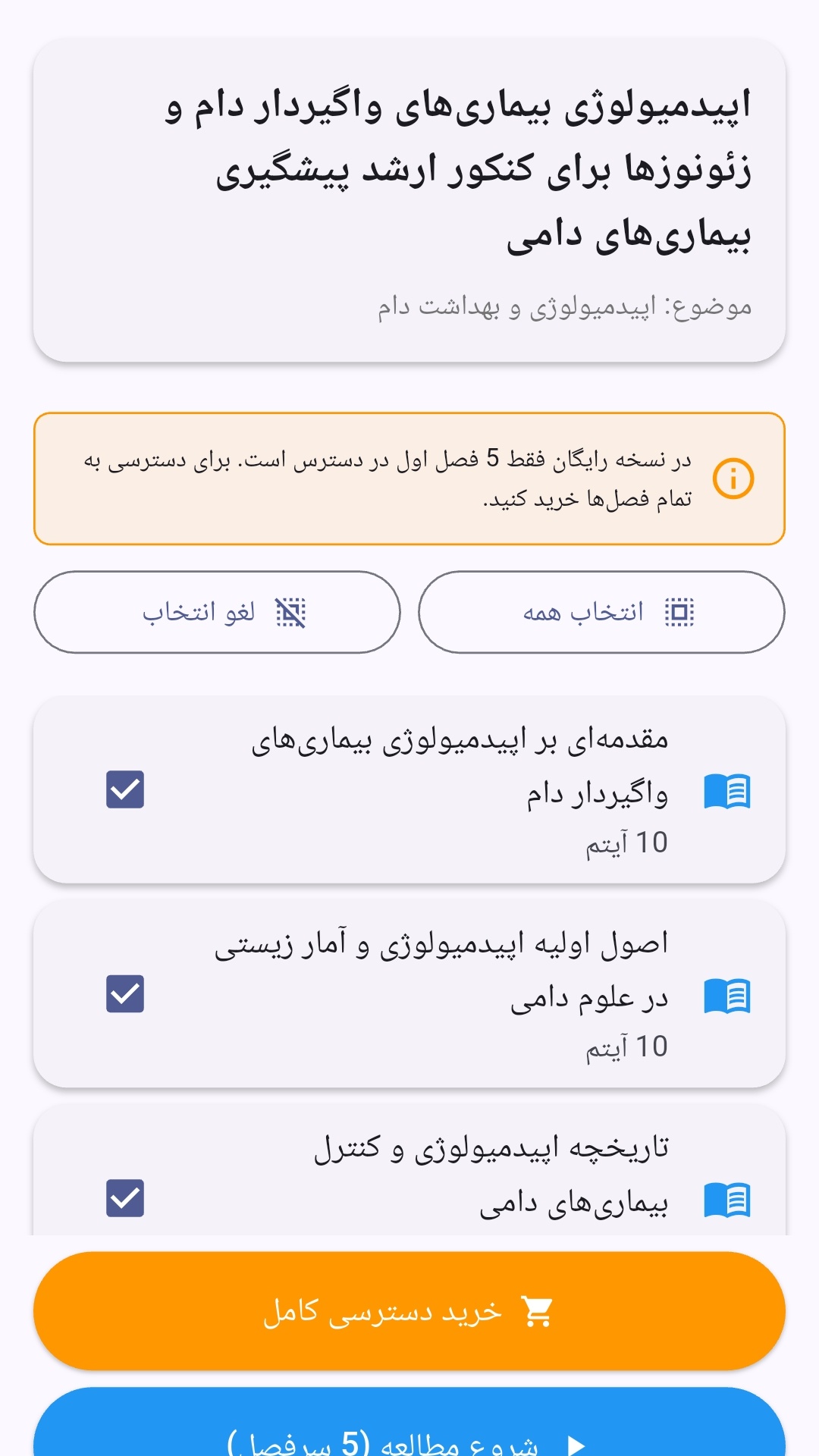
- صفحهبندی ساده برای انتخاب دوره و شروع مرور.
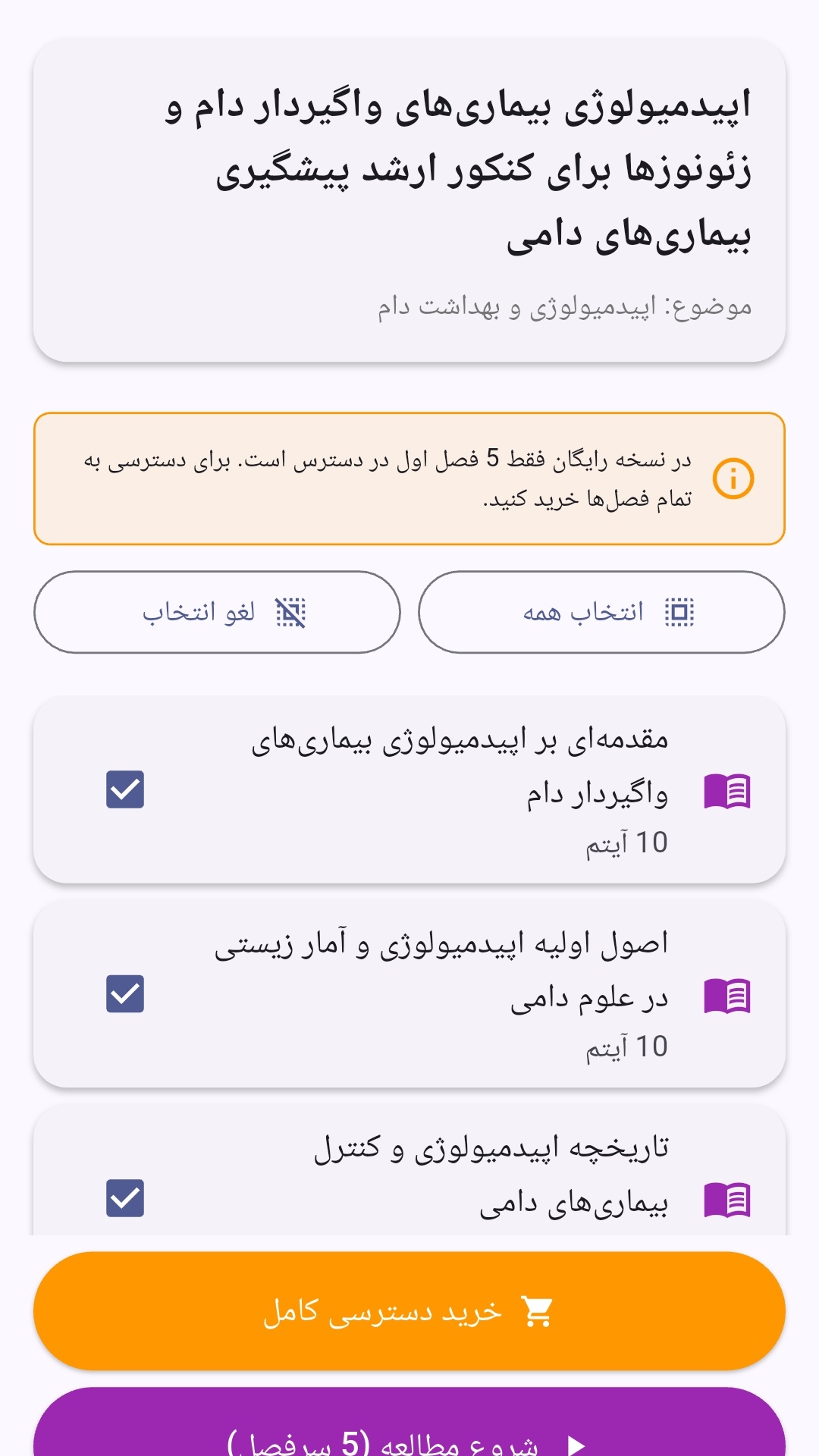
- نمایش تعداد دفعات مرور هر فصل.
- انتخاب چند فصل برای مرور همزمان.
- امکان تمرکز بر فصلهایی که هنوز مرور نشدهاند.
این اپلیکیشن برای دانشآموزان، دانشجویان، داوطلبان آزمونها و علاقهمندان به یادگیری طراحی شده است؛ بهویژه کسانی که میخواهند مطالب آموزشی را در زمانهای کوتاه مرور کنند، دانستههای خود را بسنجند و مطالعه منظمتری داشته باشند.
نظرات
هنوز نظری ثبت نشده است.
وارد شوید تا نظر ثبت کنید.