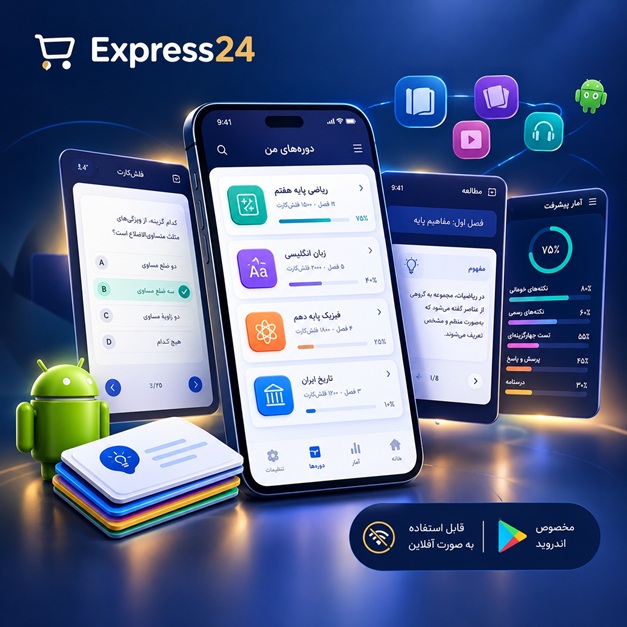
اپلیکیشن اندرویدی فلشکارت آموزشی SQL Server The Essential Toolkit for SQL Server Evolution
🎓 دوره آموزشی جامع
📚 اطلاعات دوره
عنوان دوره: دوره SQL Server The Essential Toolkit for SQL Server Evolution
موضوع کلی: برنامه نویسی
موضوع میانی: Microsoft SQL Server
📋 سرفصلهای دوره
- 1. Introduction to SQL Server and Relational Databases
- 2. Understanding SQL Server Editions and Components
- 3. Installing SQL Server and SQL Server Management Studio (SSMS)
- 4. Navigating SSMS: Object Explorer and Query Editor
- 5. Relational Database Concepts: Tables, Rows, Columns
- 6. SQL Server Data Types: Choosing the Right Type
- 7. Creating and Managing Databases
- 8. Designing and Creating Tables
- 9. Primary Keys and Unique Constraints
- 10. Foreign Keys and Referential Integrity
- 11. Introduction to Transact-SQL (T-SQL)
- 12. The SELECT Statement: Retrieving Data
- 13. Filtering Data with the WHERE Clause
- 14. Sorting Results with ORDER BY
- 15. Limiting Result Sets (TOP, OFFSET-FETCH)
- 16. Understanding NULL Values
- 17. Basic Arithmetic and Column Aliases
- 18. String Manipulation Functions
- 19. Date and Time Functions
- 20. Numeric Functions
- 21. Conversion Functions: CAST and CONVERT
- 22. The CASE Expression for Conditional Logic
- 23. Aggregate Functions: COUNT, SUM, AVG, MIN, MAX
- 24. Grouping Data with GROUP BY
- 25. Filtering Grouped Data with HAVING
- 26. Joining Tables: INNER JOIN
- 27. Joining Tables: LEFT OUTER JOIN
- 28. Joining Tables: RIGHT OUTER JOIN
- 29. Joining Tables: FULL OUTER JOIN
- 30. Self-Joins and Cross Joins
- 31. Subqueries: Nested Queries
- 32. Common Table Expressions (CTEs)
- 33. Recursive CTEs
- 34. Set Operators: UNION, UNION ALL
- 35. Set Operators: INTERSECT and EXCEPT
- 36. Window Functions: ROW_NUMBER, RANK, DENSE_RANK, NTILE
- 37. Window Functions: LAG and LEAD
- 38. PIVOT and UNPIVOT Operators
- 39. Inserting Data: The INSERT Statement
- 40. Updating Data: The UPDATE Statement
- 41. Deleting Data: The DELETE Statement
- 42. The MERGE Statement: UPSERT Operations
- 43. Understanding Transactions: COMMIT, ROLLBACK, SAVEPOINT
- 44. Identity Columns and Sequence Objects
- 45. DEFAULT and CHECK Constraints
- 46. Indexes: Clustered vs. Non-Clustered
- 47. Creating and Managing Indexes
- 48. Index Maintenance: Rebuild and Reorganize
- 49. Views: Storing Complex Queries
- 50. Stored Procedures: Benefits and Basic Creation
- 51. Stored Procedures with Parameters
- 52. User-Defined Functions (UDFs): Scalar and Table-Valued
- 53. Triggers: Automating Actions on Data Events
- 54. SQL Server Architecture Overview
- 55. Database Files and Filegroups Management
- 56. Understanding Recovery Models
- 57. Full Database Backups
- 58. Differential Database Backups
- 59. Transaction Log Backups
- 60. Restoring Databases from Backups
- 61. Point-in-Time Recovery
- 62. SQL Server Agent: Automating Tasks with Jobs
- 63. Alerts, Operators, and Database Mail
- 64. SQL Server Security: Principals and Securables
- 65. Logins, Users, and Server Roles
- 66. Database Roles and Custom Roles
- 67. Granting, Denying, and Revoking Permissions
- 68. Schemas: Organizing Database Objects
- 69. Auditing SQL Server Activities
- 70. Introduction to Performance Tuning
- 71. Understanding Query Execution Plans
- 72. Interpreting Graphical Execution Plans
- 73. Identifying Performance Bottlenecks with Execution Plans
- 74. Statistics: Importance and Management
- 75. Using Dynamic Management Views (DMVs) for Monitoring
- 76. Extended Events for Advanced Monitoring
- 77. SQL Server Profiler and Trace (legacy considerations)
- 78. Analyzing and Optimizing Indexes
- 79. Troubleshooting Blocking and Deadlocks
- 80. Understanding Locking and Concurrency
- 81. Transaction Isolation Levels
- 82. Optimizing Queries with Hints
- 83. Data Compression Techniques
- 84. Table Partitioning for Large Tables
- 85. Columnstore Indexes for Analytical Workloads
- 86. Temporary Tables vs. Table Variables
- 87. Error Handling with TRY...CATCH
- 88. Cursors: Use Cases and Alternatives
- 89. Working with XML Data
- 90. Working with JSON Data
- 91. Spatial Data Types
- 92. In-Memory OLTP: Memory-Optimized Tables and Stored Procedures
- 93. Temporal Tables for Historical Data Tracking
- 94. AlwaysOn Availability Groups for High Availability
- 95. Failover Cluster Instances (FCI)
- 96. Log Shipping for Disaster Recovery
- 97. Replication: Transactional, Snapshot, Merge
- 98. Hybrid Cloud Scenarios: SQL Server on Azure VMs and Azure SQL Database
- 99. Advanced Security Features: Always Encrypted
- 100. Dynamic Data Masking
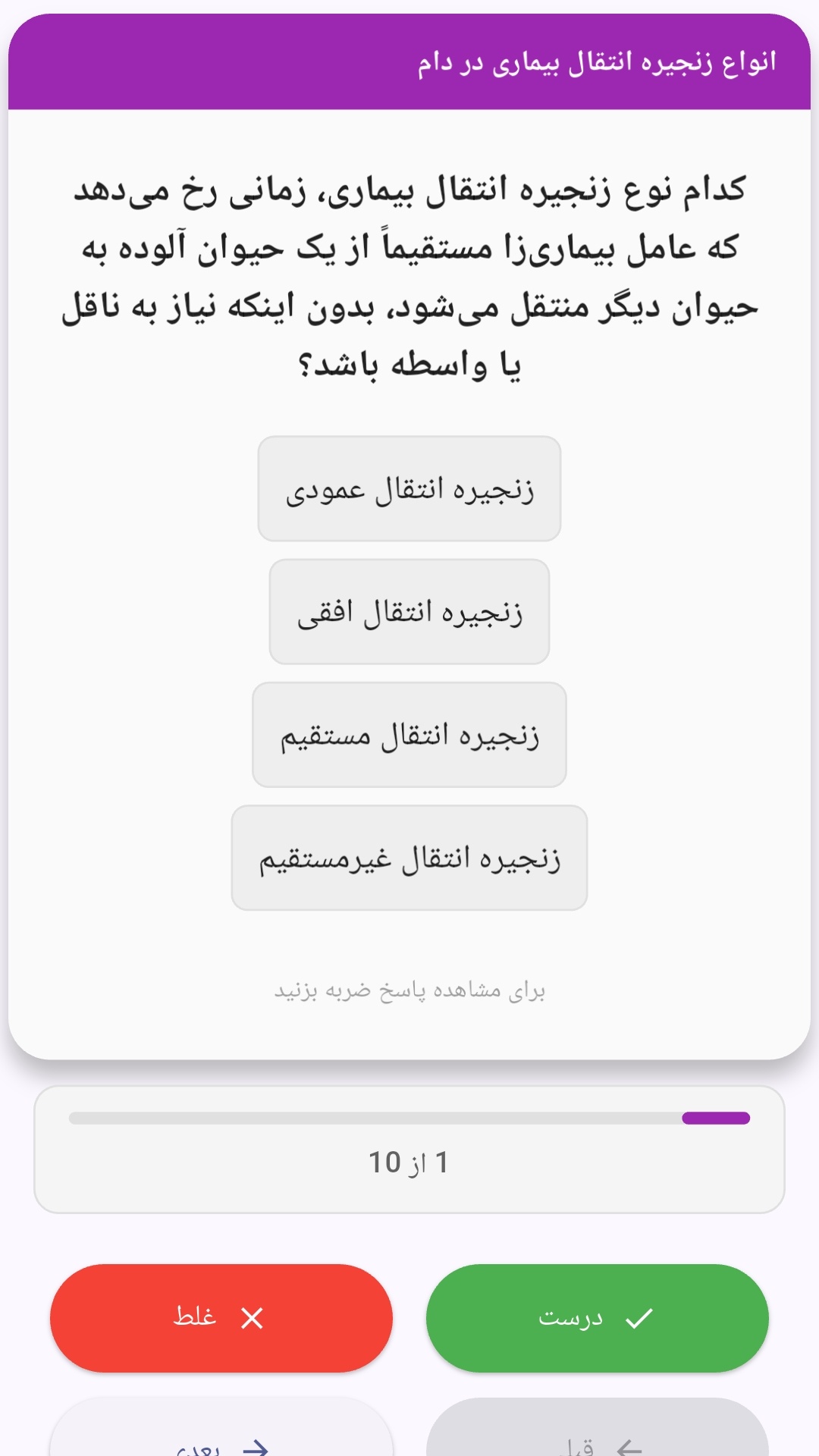
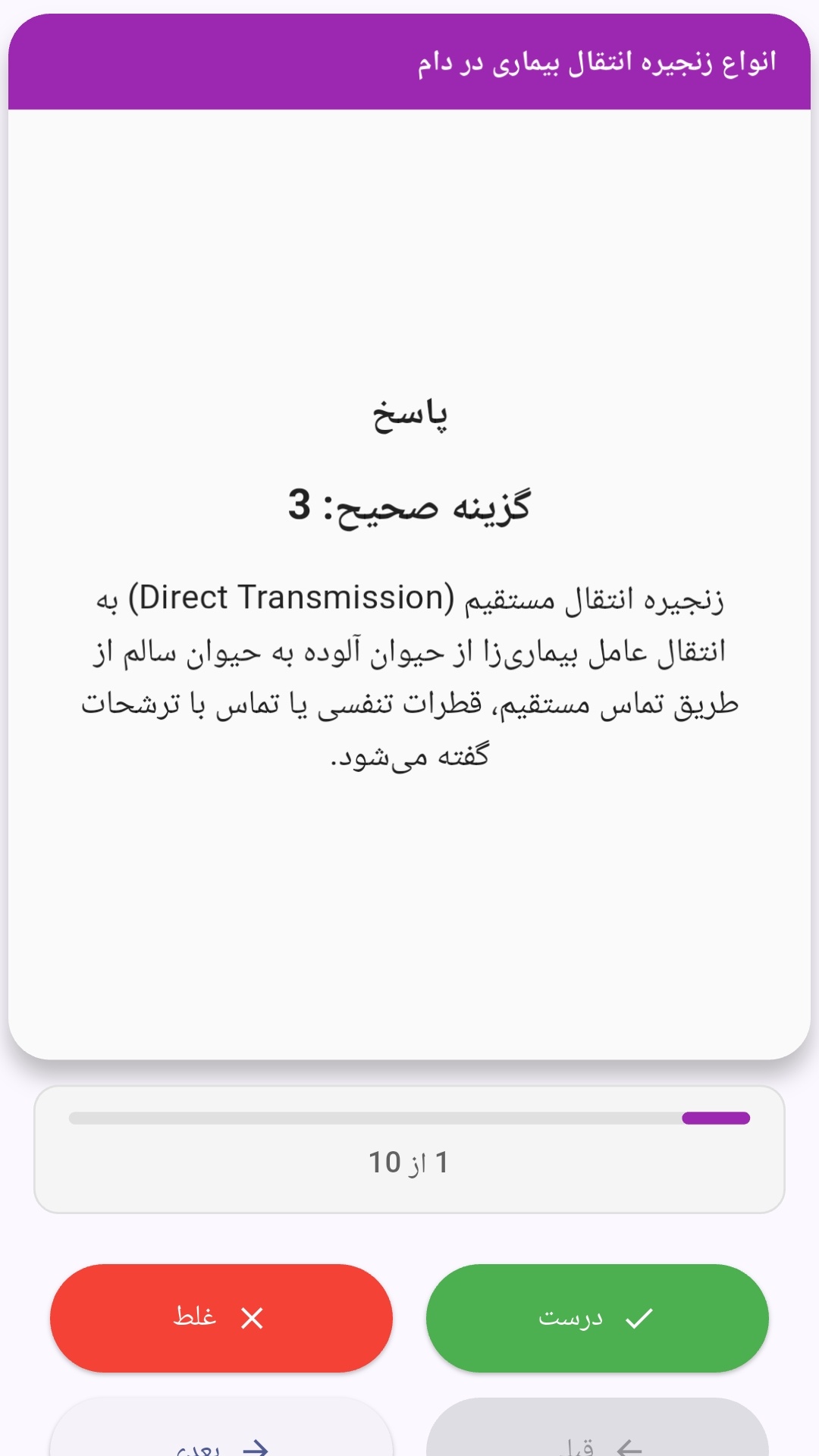
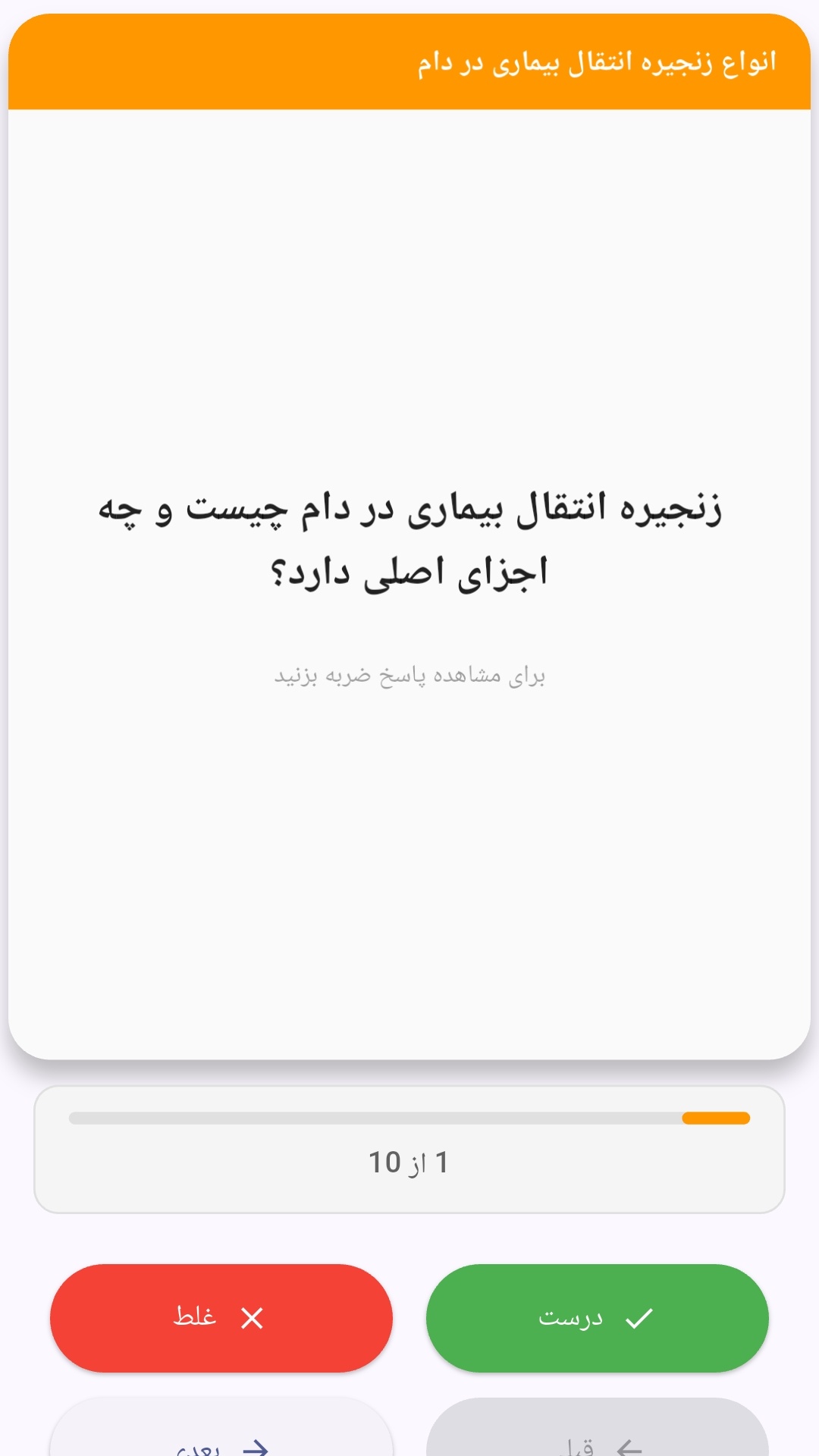
این اپلیکیشن فارسی برای یادگیری و مرور محتوای آموزشی از طریق فلشکارت طراحی شده است. کارتها را یکییکی مرور کنید، پاسخ پرسشها را به یاد بیاورید و نتیجه هر پاسخ را ثبت کنید. محتوای دوره پس از نصب درون برنامه در دسترس است تا برای مطالعه روزمره معمولاً به اتصال مداوم اینترنت نیاز نداشته باشید.
محتوای آموزشی در قالبهای متنوع ارائه میشود تا هم برای یادگیری مفاهیم جدید و هم برای تثبیت آموختهها قابل استفاده باشد.
- رابط کاربری فارسی و راستچین با فونت وزیر.
- تم روشن و تیره مطابق تنظیمات سیستم.
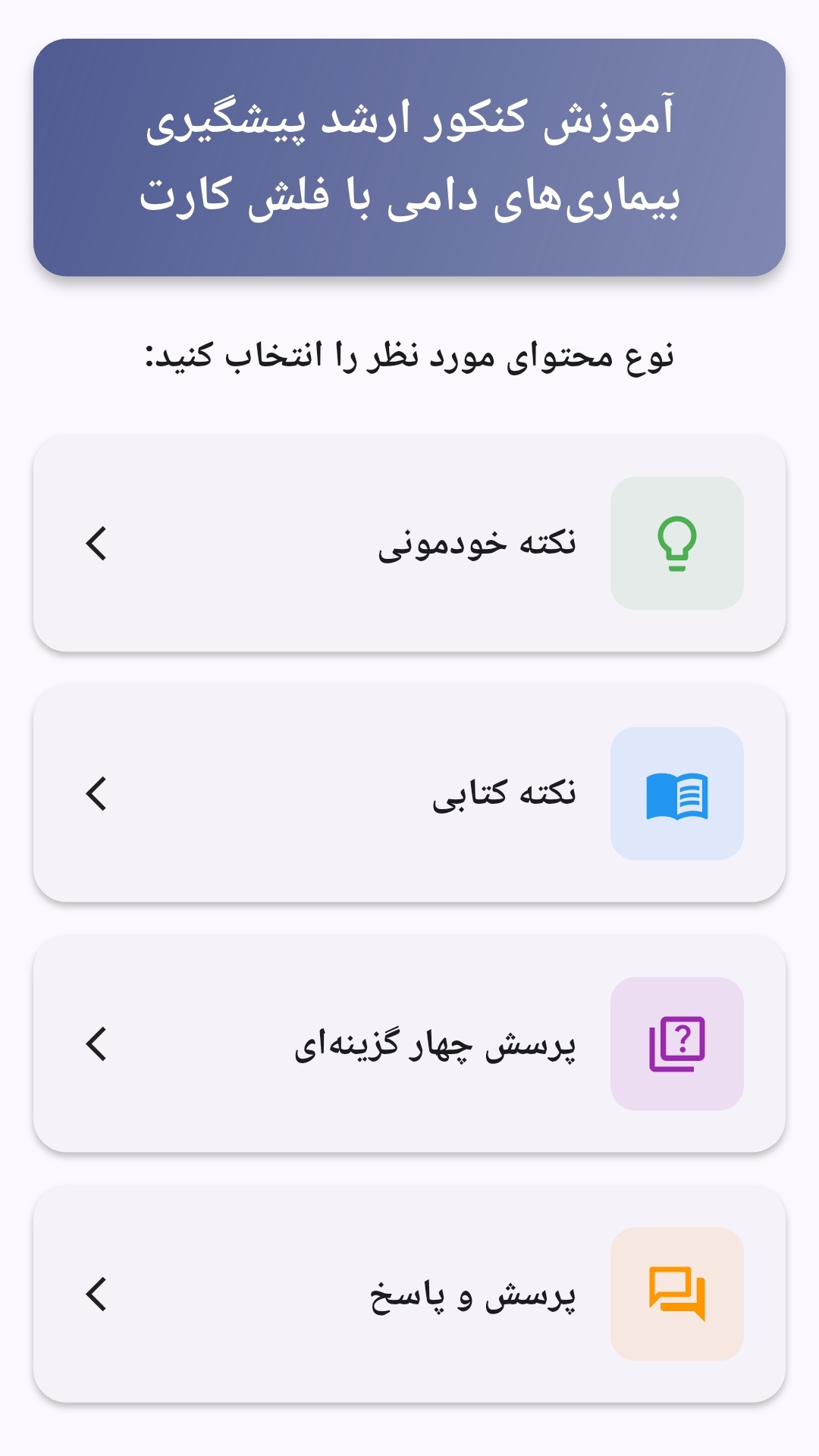
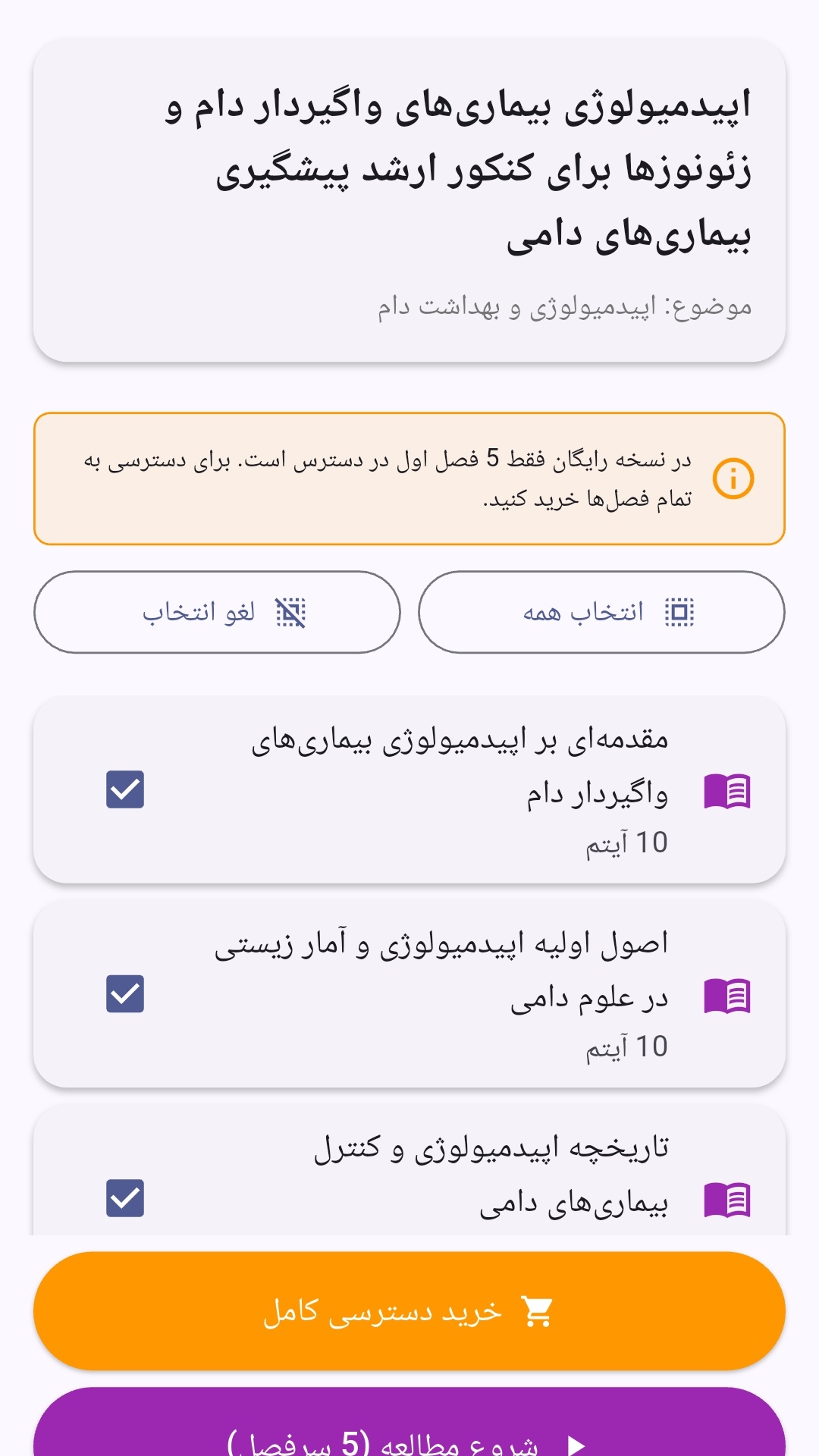
- صفحهبندی ساده برای انتخاب دوره و شروع مرور.
- نمایش تعداد دفعات مرور هر فصل.
- انتخاب چند فصل برای مرور همزمان.
- امکان تمرکز بر فصلهایی که هنوز مرور نشدهاند.
این اپلیکیشن برای دانشآموزان، دانشجویان، داوطلبان آزمونها و علاقهمندان به یادگیری طراحی شده است؛ بهویژه کسانی که میخواهند مطالب آموزشی را در زمانهای کوتاه مرور کنند، دانستههای خود را بسنجند و مطالعه منظمتری داشته باشند.
نظرات
هنوز نظری ثبت نشده است.
وارد شوید تا نظر ثبت کنید.