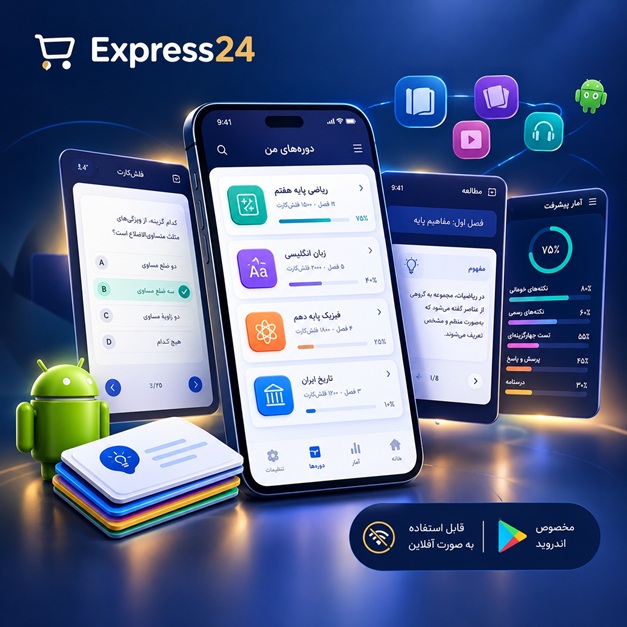
اپلیکیشن اندرویدی فلشکارت آموزشی معماری نرمافزار: API first approach for microservice architectures.
🎓 دوره آموزشی جامع
📚 اطلاعات دوره
عنوان دوره: دوره معماری نرمافزار: API first approach for microservice architectures.
موضوع کلی: برنامه نویسی
موضوع میانی: معماری نرمافزار
📋 سرفصلهای دوره
- 1. Introduction to Software Architecture
- 2. The Importance of Software Architecture
- 3. Architectural Styles and Patterns Overview
- 4. Monolithic Architecture: Pros and Cons
- 5. Evolution from Monoliths to Distributed Systems
- 6. Introduction to Microservice Architecture
- 7. Key Principles of Microservices
- 8. Benefits of Microservices
- 9. Challenges of Microservices Adoption
- 10. When to Choose Microservices
- 11. Domain-Driven Design (DDD) for Microservices
- 12. Bounded Contexts in Microservices
- 13. Conway's Law and Team Organization
- 14. Understanding Service Boundaries
- 15. The Twelve-Factor App Methodology
- 16. What is the API First Approach?
- 17. Why Adopt API First?
- 18. Benefits of API First Development
- 19. Shifting Left with API First
- 20. API First vs. Code First
- 21. The Role of the API Designer
- 22. Understanding API Consumers
- 23. Designing for Usability and Developer Experience
- 24. API Design Guidelines and Best Practices
- 25. RESTful Principles Refresher
- 26. Introduction to gRPC
- 27. Introduction to GraphQL
- 28. Comparing API Styles: REST, gRPC, GraphQL
- 29. Choosing the Right API Style
- 30. The API First Development Workflow
- 31. Designing RESTful Resources
- 32. HTTP Methods and Semantics in REST
- 33. Status Codes and Error Handling in REST
- 34. Pagination, Filtering, and Sorting in REST APIs
- 35. Version Management for REST APIs
- 36. Evolution of REST APIs
- 37. Protobuf Basics for gRPC
- 38. Defining Services and Messages in gRPC
- 39. gRPC Communication Patterns (Unary, Streaming)
- 40. Error Handling and Metadata in gRPC
- 41. GraphQL Schema Definition Language (SDL)
- 42. Queries, Mutations, and Subscriptions in GraphQL
- 43. Resolvers and Data Fetching in GraphQL
- 44. API Specification Languages Overview
- 45. Introduction to OpenAPI Specification (OAS)
- 46. Writing OpenAPI Definitions for REST APIs
- 47. Tools for OpenAPI Development and Validation
- 48. Introduction to AsyncAPI for Event-Driven Architectures
- 49. Documenting APIs with OpenAPI/AsyncAPI
- 50. API Contract Management and Governance
- 51. Decomposition Patterns for Microservices
- 52. The API Gateway Pattern
- 53. Implementing an API Gateway (e.g., NGINX, Kong, Spring Cloud Gateway)
- 54. Service Discovery Mechanisms (Client-side, Server-side)
- 55. Implementing Service Discovery (e.g., Eureka, Consul, Kubernetes DNS)
- 56. Inter-Service Communication Strategies
- 57. Synchronous Communication: HTTP/gRPC Calls
- 58. Asynchronous Communication: Message Brokers
- 59. Introduction to Message Queues (e.g., RabbitMQ, SQS)
- 60. Introduction to Event Streaming Platforms (e.g., Kafka)
- 61. Event-Driven Architecture with Microservices
- 62. Event Sourcing Pattern
- 63. Command Query Responsibility Segregation (CQRS)
- 64. Orchestration vs. Choreography for Business Processes
- 65. Data Management in Microservices
- 66. Database per Service Pattern
- 67. Handling Distributed Transactions: The Saga Pattern
- 68. Eventual Consistency in Distributed Systems
- 69. Data Aggregation Patterns
- 70. Caching Strategies for Microservices
- 71. Security in Microservice Architectures
- 72. Authentication Mechanisms (JWT, OAuth 2.0)
- 73. Authorization Strategies (RBAC, ABAC)
- 74. Securing APIs: API Keys, Rate Limiting, Throttling
- 75. API Security Best Practices
- 76. Centralized Logging for Microservices
- 77. Monitoring Microservice Health and Performance
- 78. Distributed Tracing (e.g., OpenTelemetry, Jaeger, Zipkin)
- 79. Alerting and Incident Management
- 80. Health Checks and Readiness Probes
- 81. Configuration Management for Microservices
- 82. Externalized Configuration (e.g., Spring Cloud Config, Consul KV)
- 83. Resilience Patterns: Circuit Breaker
- 84. Resilience Patterns: Bulkhead and Retry
- 85. Designing for Fault Tolerance
- 86. Introduction to CI/CD for Microservices
- 87. Building and Packaging Microservices
- 88. Containerization with Docker
- 89. Orchestrating Microservices with Kubernetes
- 90. Kubernetes Concepts: Pods, Deployments, Services, Ingress
- 91. Serverless Functions and Microservices (FaaS)
- 92. Automated Testing Strategies for Microservices
- 93. Unit Testing Microservices
- 94. Integration Testing Microservices
- 95. Contract Testing (Pact)
- 96. End-to-End Testing and Consumer-Driven Contracts
- 97. API Versioning and Deprecation Strategies
- 98. API Management Platforms (e.g., Azure API Management, AWS API Gateway, Apigee)
- 99. Migrating from Monolith to Microservices (Strangler Fig Pattern)
- 100. Refactoring Existing Microservices
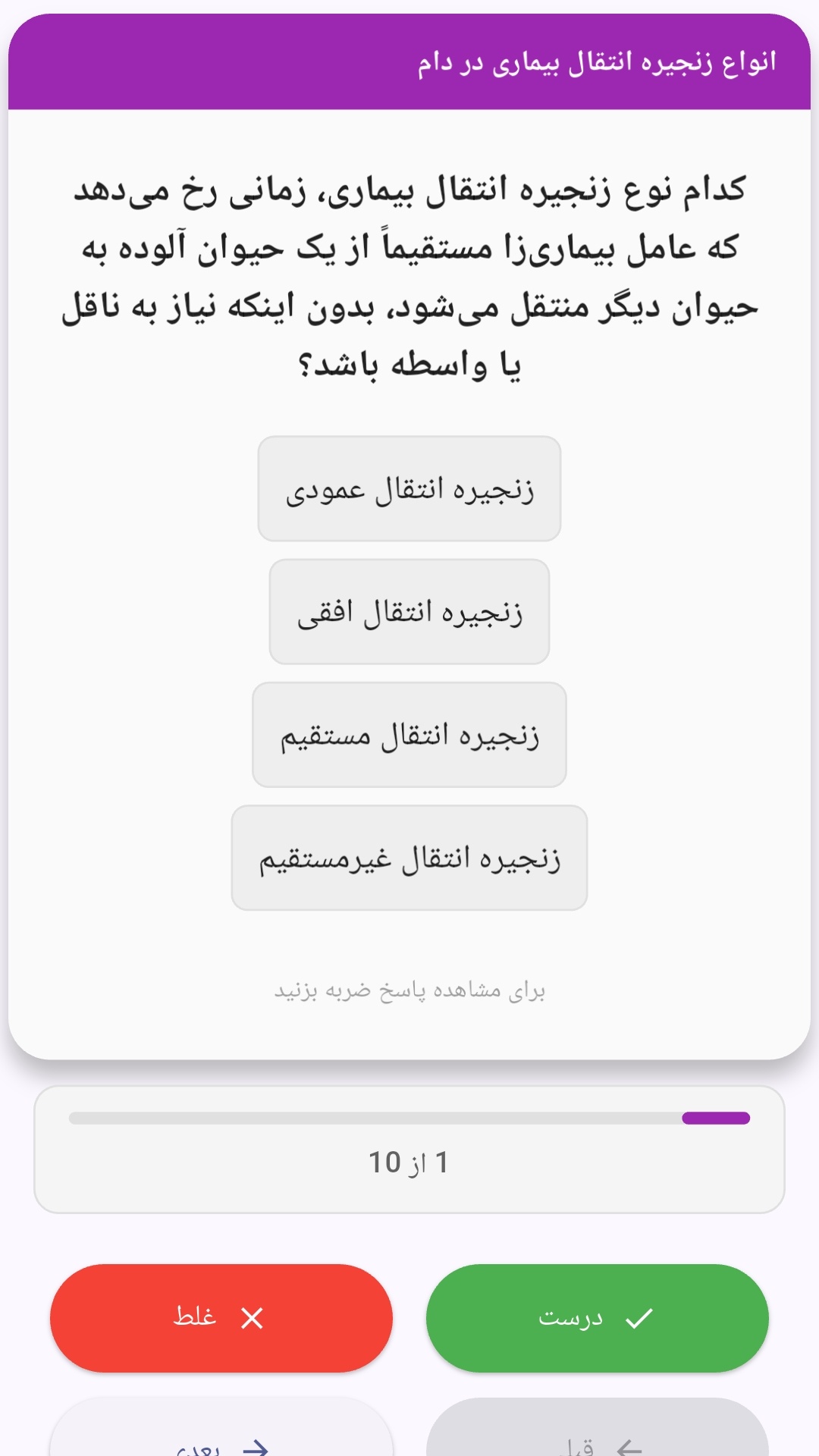
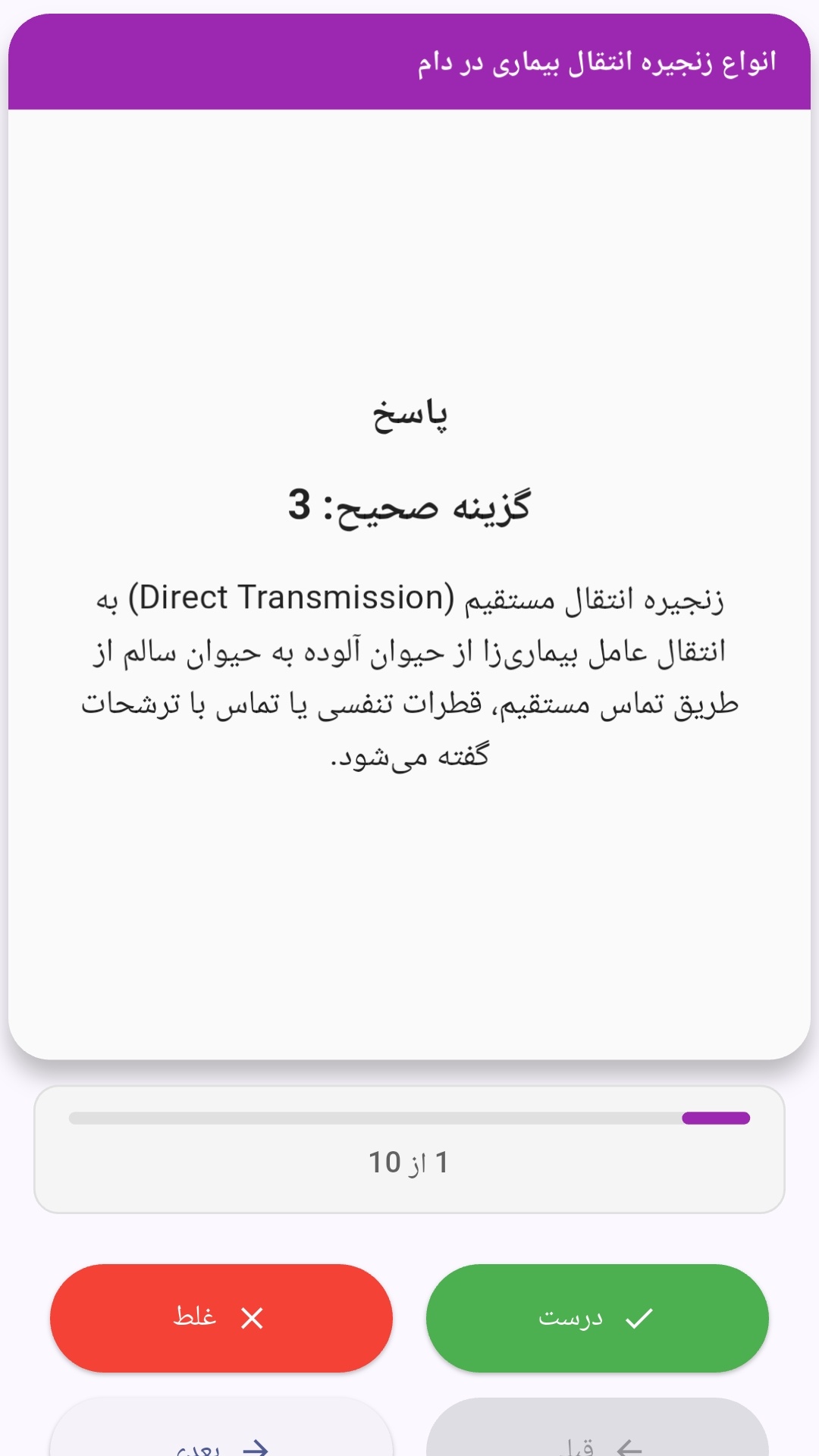
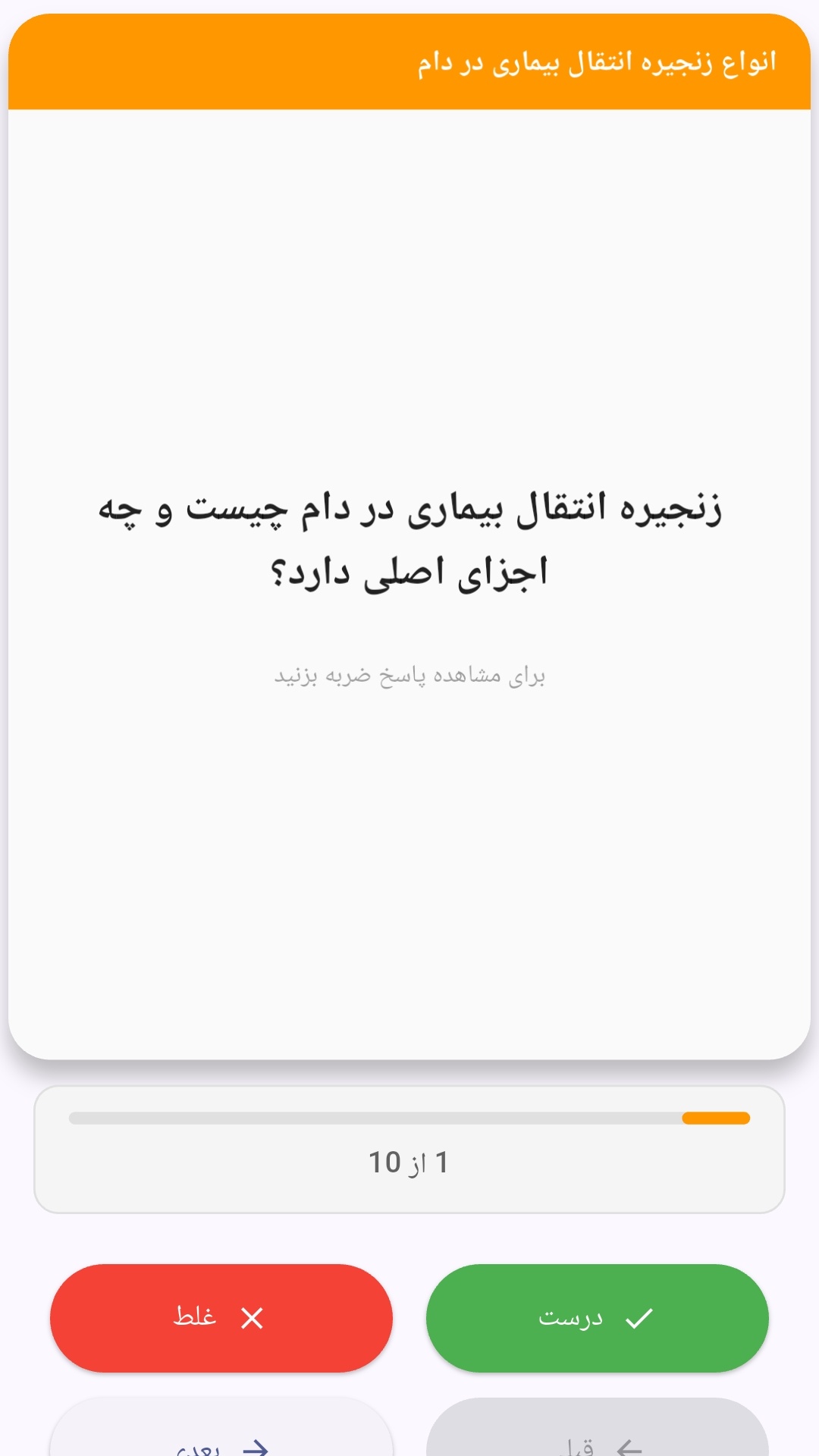
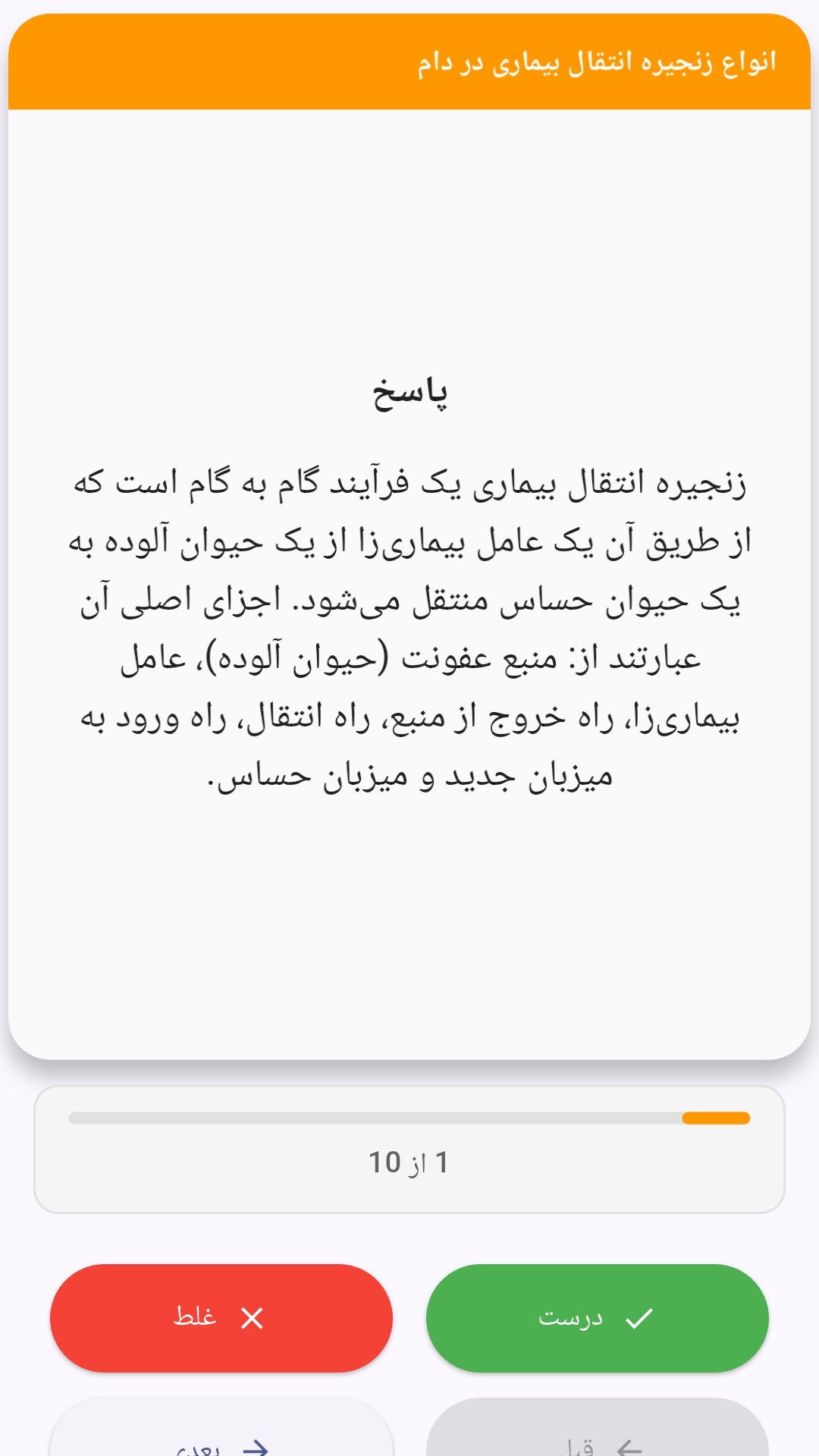
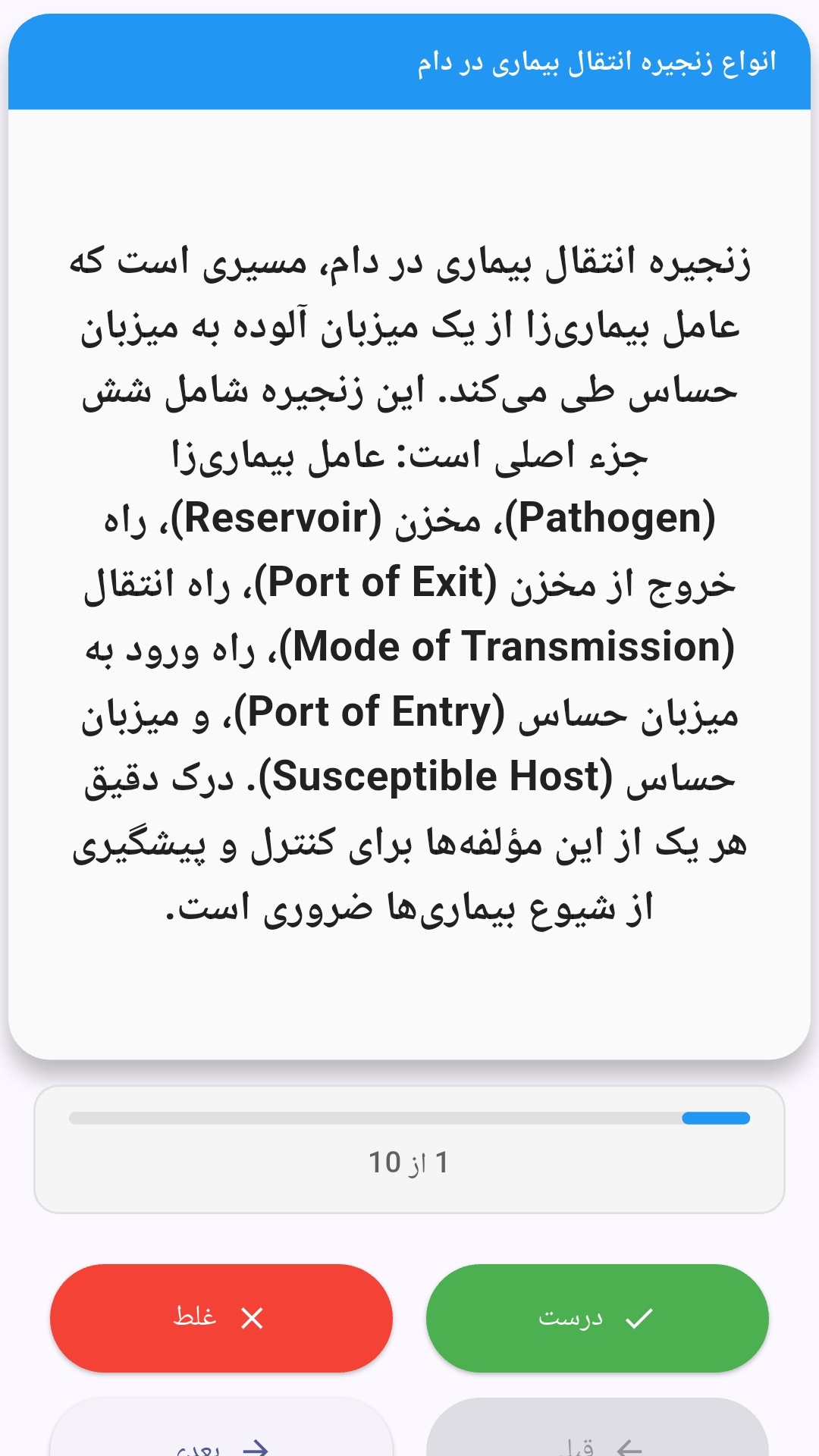
این اپلیکیشن فارسی برای یادگیری و مرور محتوای آموزشی از طریق فلشکارت طراحی شده است. کارتها را یکییکی مرور کنید، پاسخ پرسشها را به یاد بیاورید و نتیجه هر پاسخ را ثبت کنید. محتوای دوره پس از نصب درون برنامه در دسترس است تا برای مطالعه روزمره معمولاً به اتصال مداوم اینترنت نیاز نداشته باشید.
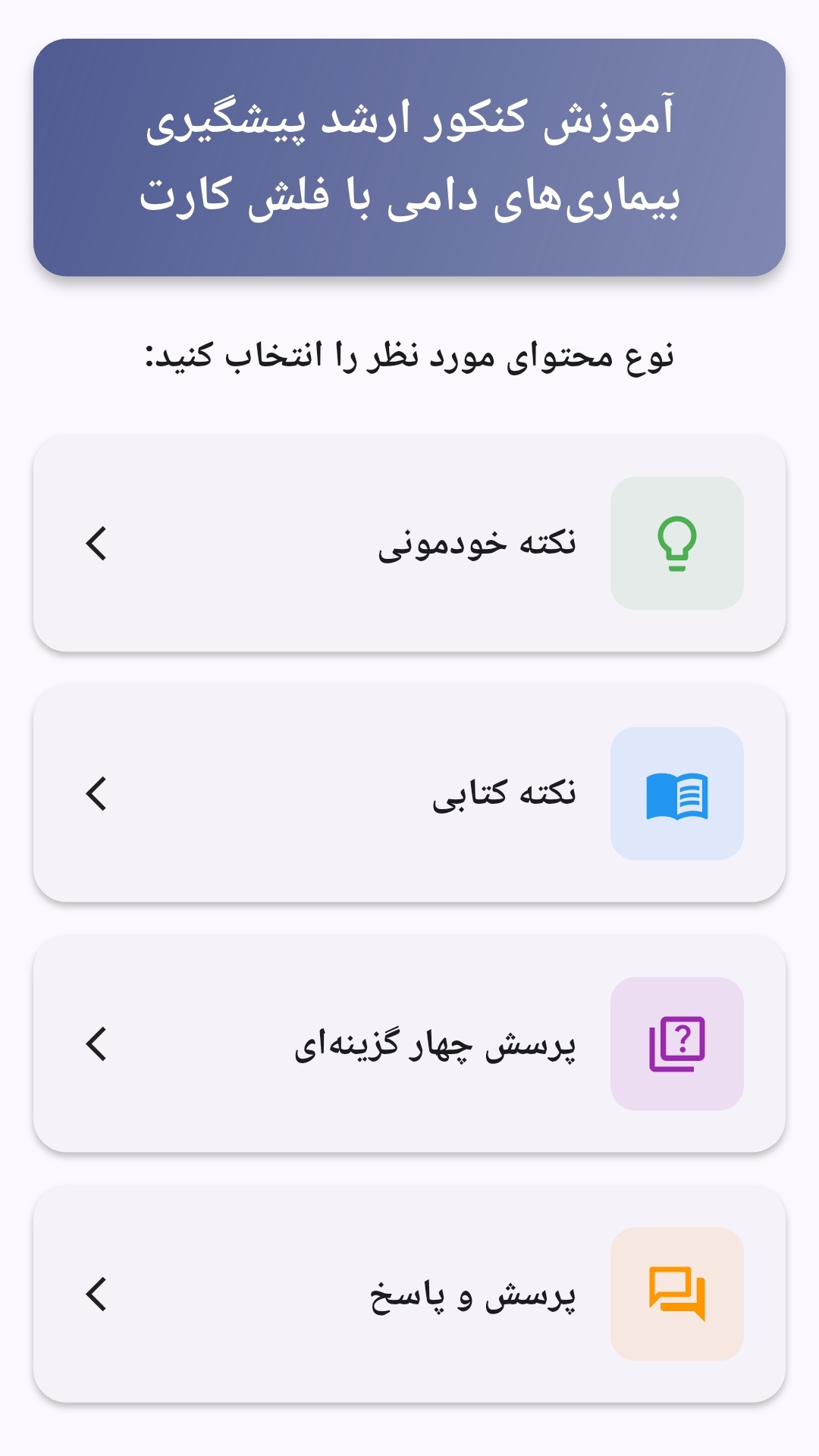
محتوای آموزشی در قالبهای متنوع ارائه میشود تا هم برای یادگیری مفاهیم جدید و هم برای تثبیت آموختهها قابل استفاده باشد.
- رابط کاربری فارسی و راستچین با فونت وزیر.
- تم روشن و تیره مطابق تنظیمات سیستم.
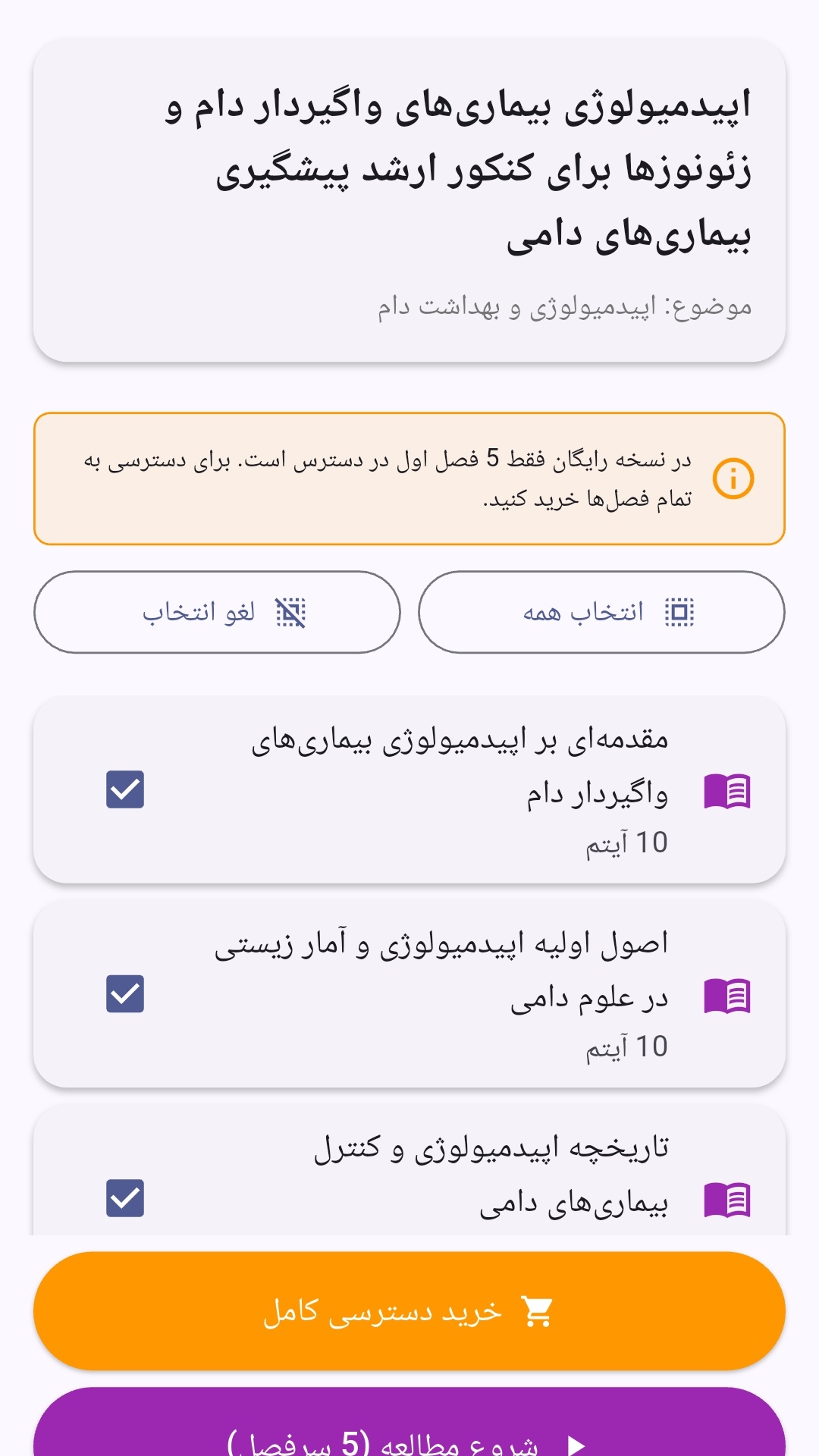
- صفحهبندی ساده برای انتخاب دوره و شروع مرور.
- نمایش تعداد دفعات مرور هر فصل.
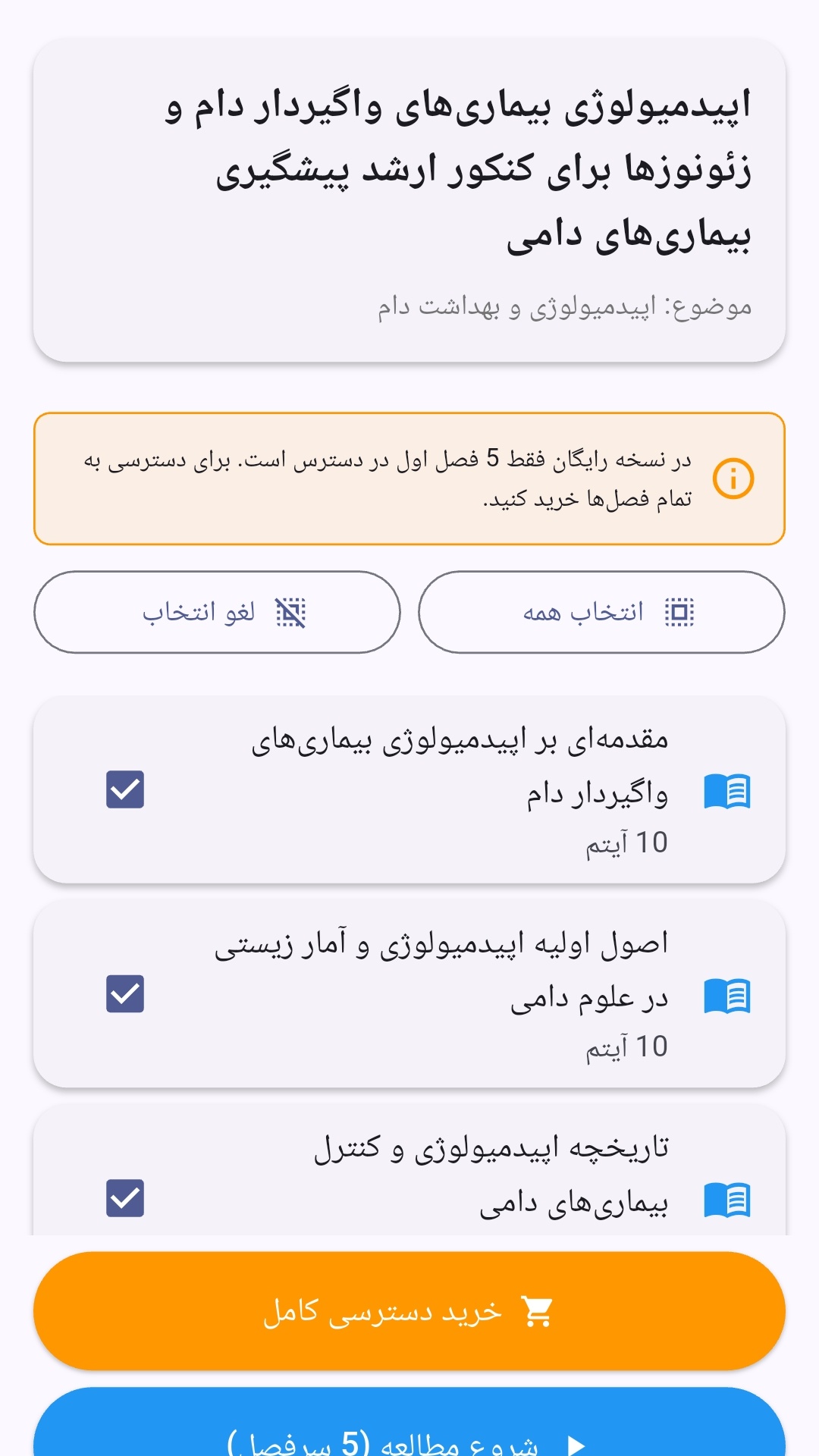
- انتخاب چند فصل برای مرور همزمان.
- امکان تمرکز بر فصلهایی که هنوز مرور نشدهاند.
این اپلیکیشن برای دانشآموزان، دانشجویان، داوطلبان آزمونها و علاقهمندان به یادگیری طراحی شده است؛ بهویژه کسانی که میخواهند مطالب آموزشی را در زمانهای کوتاه مرور کنند، دانستههای خود را بسنجند و مطالعه منظمتری داشته باشند.
نظرات
هنوز نظری ثبت نشده است.
وارد شوید تا نظر ثبت کنید.